
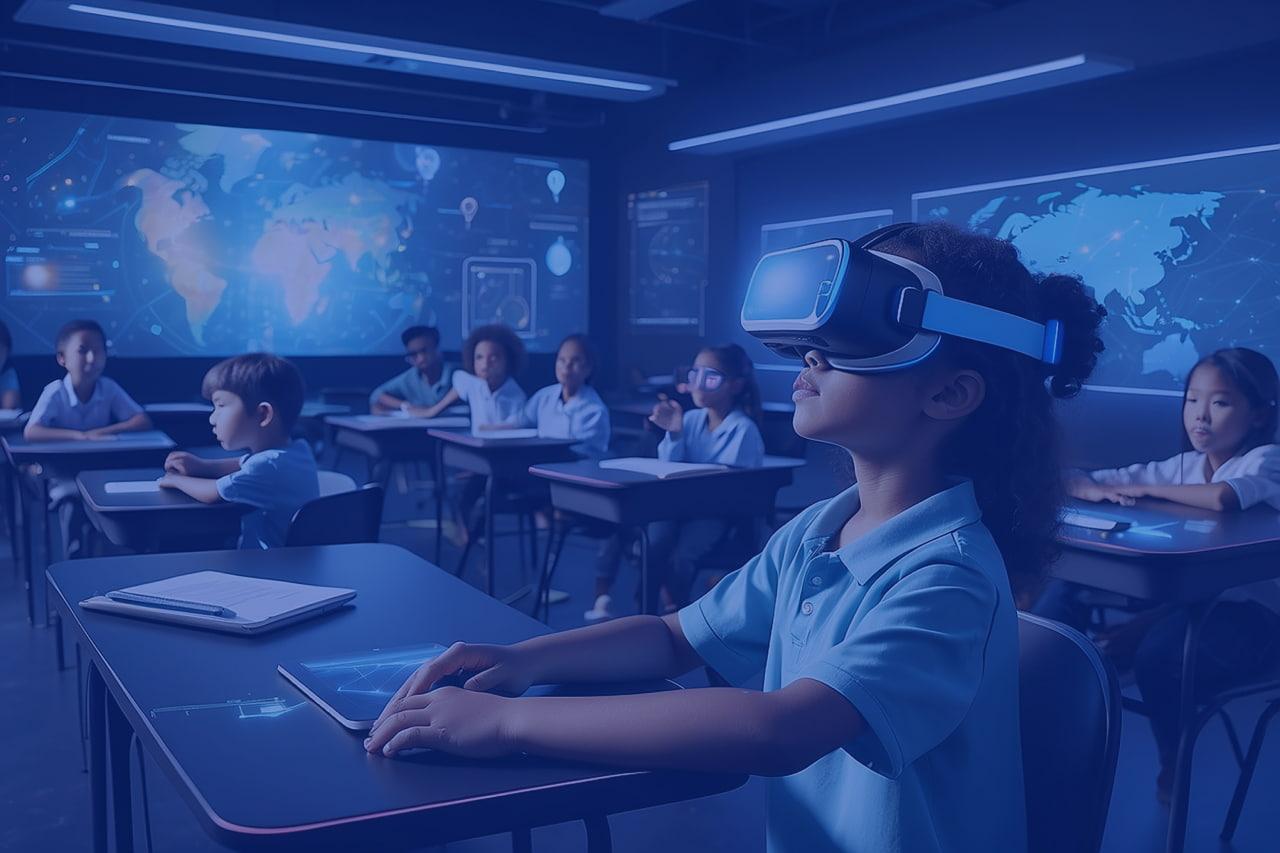
Revolutionizing Education: How VR/AR Are Transforming Immersive Learning in Modern Classrooms
Introduction: The New Dimension of Learning
In today’s rapidly evolving educational surroundings, immersive learning technologies are more than a passing trend—they are a cornerstone of the modern classroom. As VR and AR in education continue to gain traction, teachers and students alike are discovering the power of learning by doing, seeing, and experiencing. But what exactly makes these technologies so revolutionary, and how are they seamlessly integrating into the daily lives of students?
What Are VR and AR in Education?
Virtual Reality (VR) allows users to enter a fully digital world with the help of VR headsets, creating a sense of presence in simulated environments—be it the surface of Mars or the inside of the human heart.
Augmented Reality (AR), meanwhile, overlays digital data—like 3D models, text, or audio—onto the real world, usually via tablets, smartphones, or AR glasses. These technologies are unlocking a wealth of opportunities for immersive learning, making abstract concepts tangible and engaging.

The Benefits of Immersive Learning with VR/AR
Why are schools racing to adopt VR/AR tools? Here’s what makes them game-changers in education:
- Enhanced Engagement: Interactive 3D experiences hold students’ attention far longer than traditional lectures.
- Deeper Understanding: Visualizing complex topics—like molecular structures or ancient sites—makes comprehension quicker and easier.
- Active Participation: Learners can practice skills in realistic scenarios, from performing virtual lab experiments to exploring ancient civilizations.
- Personalized Learning: Adapt lessons to individual abilities and learning styles with customizable VR/AR content.
- Global Accessibility: Visit museums, monuments, or even other countries from the safety and comfort of the classroom.
- Safe and Cost-Effective Training: Practice experiments or hazardous procedures risk-free in a virtual environment.
“Studies show that students retain up to 75% more knowledge after immersive learning experiences compared to traditional classroom instruction.”
— Education Technology Research 2023
Case Studies: VR/AR in Action
1. Exploring History with Google Expeditions
Google Expeditions enables teachers to take their students on over 900 virtual field trips, such as touring the Pyramids of Giza or the International space Station. Educators report a dramatic increase in curiosity and class participation with each VR session.
2. Medical Training with HoloLens
In leading medical schools, Microsoft HoloLens AR glasses allow anatomy students to examine 3D holograms of organs right above their textbooks. No more flat diagrams—students can walk around digital hearts, enlarge, and rotate them for detailed study.
3. Language Learning with MondlyVR
MondlyVR creates virtual settings, such as coffee shops or airports, for immersive conversations with AI characters. This real-life practice boosts language fluency and confidence beyond rote learning.
Practical Tips: Bringing VR/AR into Your Classroom
ready to embrace immersive learning? Here are some actionable steps to get started:
- Start Small: Begin with simple AR apps on smartphones or tablets before committing to expensive VR hardware.
- Leverage Free Resources: Explore platforms like Google Expeditions, classvr, and MondlyVR which offer free or low-cost immersive content.
- integrate with Curriculum: Choose VR/AR lessons that align with learning objectives to enhance, not replace, your current teaching strategies.
- Encourage Collaboration: Use group-based VR/AR activities to foster teamwork and problem-solving skills.
- Monitor Screen time: as with any technology, balance is key. Limit VR/AR sessions and periodically review the impact on student engagement and well-being.
Challenges and Considerations
While the benefits are significant, integrating VR/AR technology in classrooms also presents some hurdles:
- Cost: High-quality VR headsets and AR devices can be expensive, though prices continue to decrease as technology evolves.
- Technical Support: Schools need reliable WiFi, updated devices, and staff who are comfortable troubleshooting tech issues.
- Content Quality: Not all VR/AR educational apps are created equal. It’s essential to select age-appropriate,accurate,and pedagogically sound resources.
- Accessibility: Ensure VR/AR experiences accommodate students with diverse physical and learning needs.
First-Hand Experience: Teacher & Student Voices
“Watching students collaborate on a virtual Mars colony project was inspiring—their creativity and teamwork exceeded anything I’ve seen with traditional group work.”
– Mrs. Angela Kim, 7th Grade Science Teacher
“The AR chemistry app helped me finally understand how molecules bond. It was way easier than trying to imagine from a textbook.”
– Liam,High School Student
“I was really nervous about speaking English in front of people. Practicing in VR helped me gain confidence!”
– Sofia, ESL Learner
The Future of Immersive Learning: what’s Next?
New advancements in AI-driven adaptive learning and multiplayer VR classrooms promise deeper personalization and global collaboration. As 5G networks expand and hardware becomes more affordable, expect even more interactive and realistic experiences—like fully simulated science labs or cross-continental cultural exchanges in real-time VR environments.
Educational technology adoption will continue to grow, and tomorrow’s classrooms may look drastically different from today’s. Early familiarity with VR/AR not only engages students but also equips them with digital skills vital for the future workforce.
Conclusion: Embracing the Immersive Revolution in Education
The integration of VR and AR technologies in education is no longer science fiction—it’s reality. Immersive learning is making lessons more dynamic, equitable, and memorable. Whether you’re an educator looking to inspire students,a school leader seeking innovative solutions,or a parent curious about your child’s educational journey,now is the perfect time to explore VR/AR learning tools.
By championing these technologies today, you’re not just keeping up with trends—you’re helping to build a future where every student has the power to explore, create, and discover in ways they never thought possible.
Are you ready to revolutionize your classroom? Immersive technology is here, and the possibilities for education have never been more exciting.