
Revolutionizing Education: How VR/AR Drives Immersive Learning in Modern Classrooms
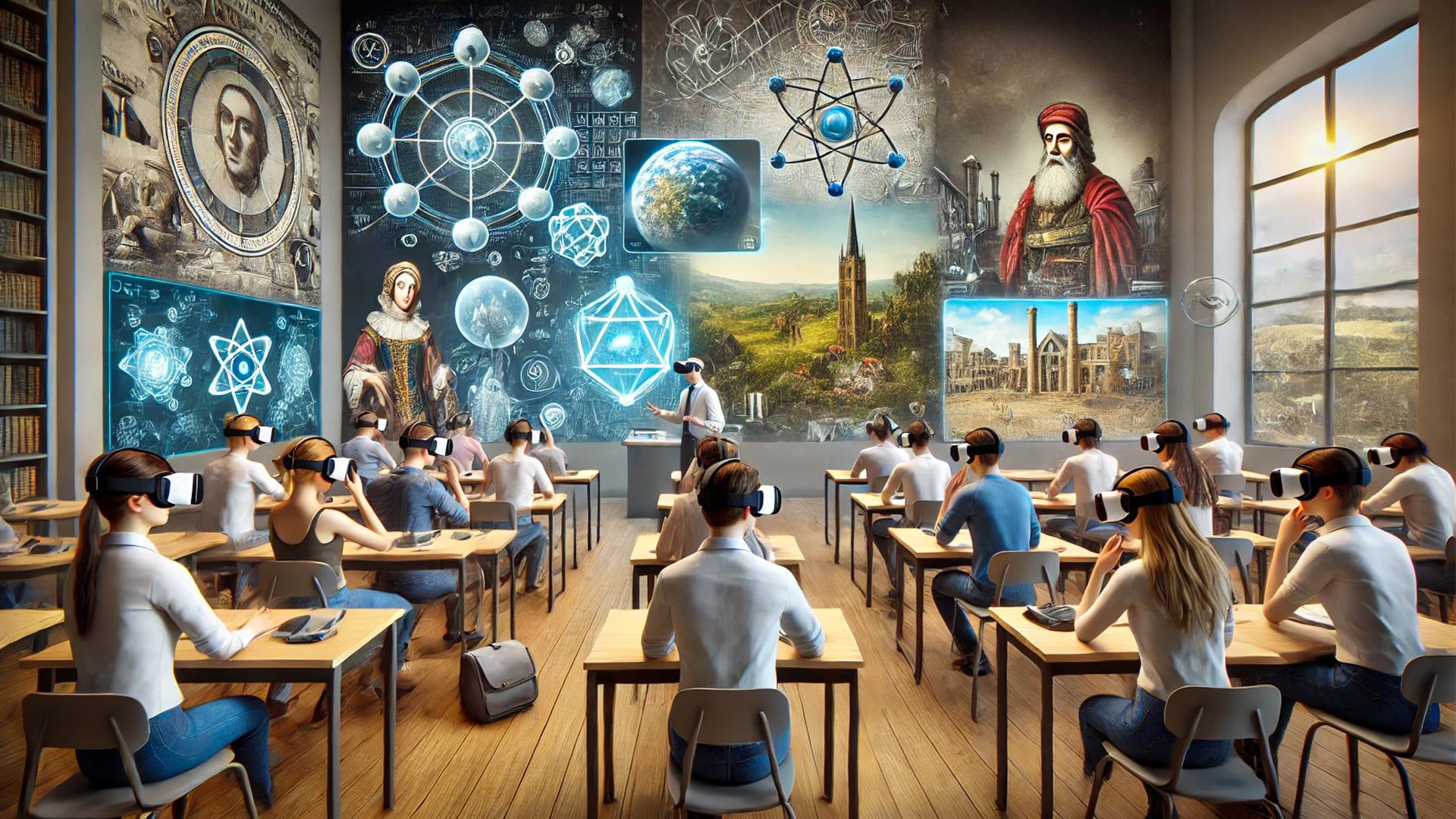
Imagine a classroom where students don’t just read about the Roman Colosseum or the solar system—they walk through them, interact with planets and historical figures, and engage deeply with the subject matter. this is becoming reality thanks to the rise of VR (Virtual Reality) and AR (Augmented Reality) in education. As we step further into the digital age, VR and AR are reshaping how teachers teach and how students learn, making education more engaging, personalized, and effective than ever before.
What Are VR and AR in Education?
Virtual Reality refers to fully immersive digital environments where learners can interact with 3D worlds using devices like VR headsets. Augmented Reality, on the other hand, overlays digital elements—such as images, data, and animations—onto the real world, typically viewed through smartphones, tablets, or AR glasses. Together, VR and AR create immersive learning experiences that are revolutionizing the traditional classroom setting.
The Importance of Immersive Learning in Modern Classrooms
as education evolves, so does the need to enhance student engagement and retention.Immersive technologies such as VR and AR in the classroom cater to visual, auditory, and kinesthetic learners alike, creating multisensory educational experiences. These tools break the boundaries of conventional teaching by:
- Enabling experiential learning and interactive simulations
- Making abstract concepts concrete and tangible
- Boosting motivation, curiosity, and participation
- Catering to diverse learning styles and needs
Key Benefits of Integrating VR/AR in Education
Let’s explore how VR/AR technologies are transforming learning outcomes and classroom culture:
1. Enhanced Engagement and Retention
- Active participation: Students are no longer passive recipients; they engage directly with learning materials.
- Higher Knowledge Retention: Immersive experiences help learners remember complex information longer and understand it better.
2. Real-World Request and critical Thinking
- Experiential Learning: VR simulations like virtual chemistry labs or AR-enhanced biology lessons provide hands-on practice in a safe, cost-effective habitat.
- Problem-Solving skills: Scenario-based challenges in virtual worlds foster analytical skills and decision-making.
3. Inclusivity and Personalized Learning
- Adaptable Content: Lessons can be tailored to different learning speeds and levels.
- Special Needs Support: VR/AR solutions offer tools for students with learning disabilities,making education more accessible.
4. Safe Virtual Exploration
- No Geographical Barriers: Students can visit the Egyptian Pyramids or the surface of Mars without leaving the classroom.
- Safe Risk-Taking: Science experiments, fieldwork, or emergency scenarios can be simulated safely.
real-World Case Studies: VR/AR in Action
Schools and institutions worldwide are already seeing tangible success from implementing VR/AR technology in education. here are some inspiring examples:
Case Study 1: Virtual Reality Expeditions with Google Expeditions
Hundreds of schools have integrated Google Expeditions into their lesson plans. Teachers guide students on immersive field trips, from visiting the Great Wall of China to diving into the human bloodstream, making geography and biology lessons unforgettable.
Case Study 2: STEM Labs with Labster
in partnership with several universities, Labster provides virtual science labs through VR headsets, allowing students to perform complex experiments remotely. This application has proven vital during the COVID-19 pandemic, enabling uninterrupted, high-fidelity laboratory training.
Case study 3: AR Magic with Quiver
Elementary classrooms use Quiver, an AR app that brings children’s colored drawings to life, to teach anatomy, geography, and physics.This creative approach boosts both engagement and understanding, especially among younger students.
Practical Tips for teachers Embracing VR/AR in the Classroom
Interested in introducing immersive technologies in education? Here are some actionable tips for a smooth integration:
- Start Small: Test simple AR apps on smartphones or tablets before investing in expensive VR hardware.
- Leverage Free resources: platforms like Google Expeditions,Nearpod VR,or youtube 360° videos offer a wealth of free or affordable content.
- Prioritize Curriculum Alignment: Choose VR/AR experiences that directly enhance your learning objectives, rather than using technology for technology’s sake.
- Train Staff and Students: Hold workshops to foster comfort with new devices and software, ensuring a positive experience for all.
- Monitor Engagement and Progress: Collect feedback from students to continually refine your approach and maximize outcomes.
Common Challenges and How to Overcome Them
While the impact of AR/VR in education is undeniable, teachers and administrators may encounter some obstacles such as cost, accessibility, or technical glitches.Here’s how to address these concerns:
- Budget Constraints: Seek grants,collaborate with tech companies,or implement class-wide device sharing.
- Equipment Management: Establish clear protocols for handling and maintaining hardware.
- Student Distraction: Set guidelines to maintain focus and ensure that immersive experiences stay educational.
- Device Compatibility: check software requirements and updates regularly to avoid compatibility issues.
First-Hand Experience: Voices from Classroom Innovators
“Our students are now excited to come to science class—they dissect virtual frogs,explore galaxies,and even travel back in time to ancient civilizations. VR and AR have reignited the spark of curiosity.”
— Mrs. Angela Roberts, Middle School Science Teacher
“AR has made math more relatable. Using digital overlays, students see geometric shapes come to life on their desks, making problem-solving a hands-on activity.”
— Mr. John Patel, Elementary Mathematics Instructor
Future Trends: The Next Evolution of Immersive Learning
The future of VR/AR in education is incredibly promising. Integration with artificial intelligence (AI), 5G connectivity, and cloud computing will enable even more realistic, accessible, and collaborative experiences. Soon, we may see customized learning avatars, real-time translation during international virtual exchanges, and even augmented reality textbooks that update themselves.
Conclusion: Embracing the Digital Future of education
Immersive learning technologies like VR and AR are not just transforming lesson delivery—they’re paving the way for a more engaging, interactive, and inclusive educational landscape. As schools harness the power of VR/AR in modern classrooms, students are empowered to become lifelong learners, critical thinkers, and global citizens prepared for tomorrow’s challenges.
Ready to explore infinite learning possibilities? Start your VR/AR classroom journey today—and watch your students’ curiosity soar!