
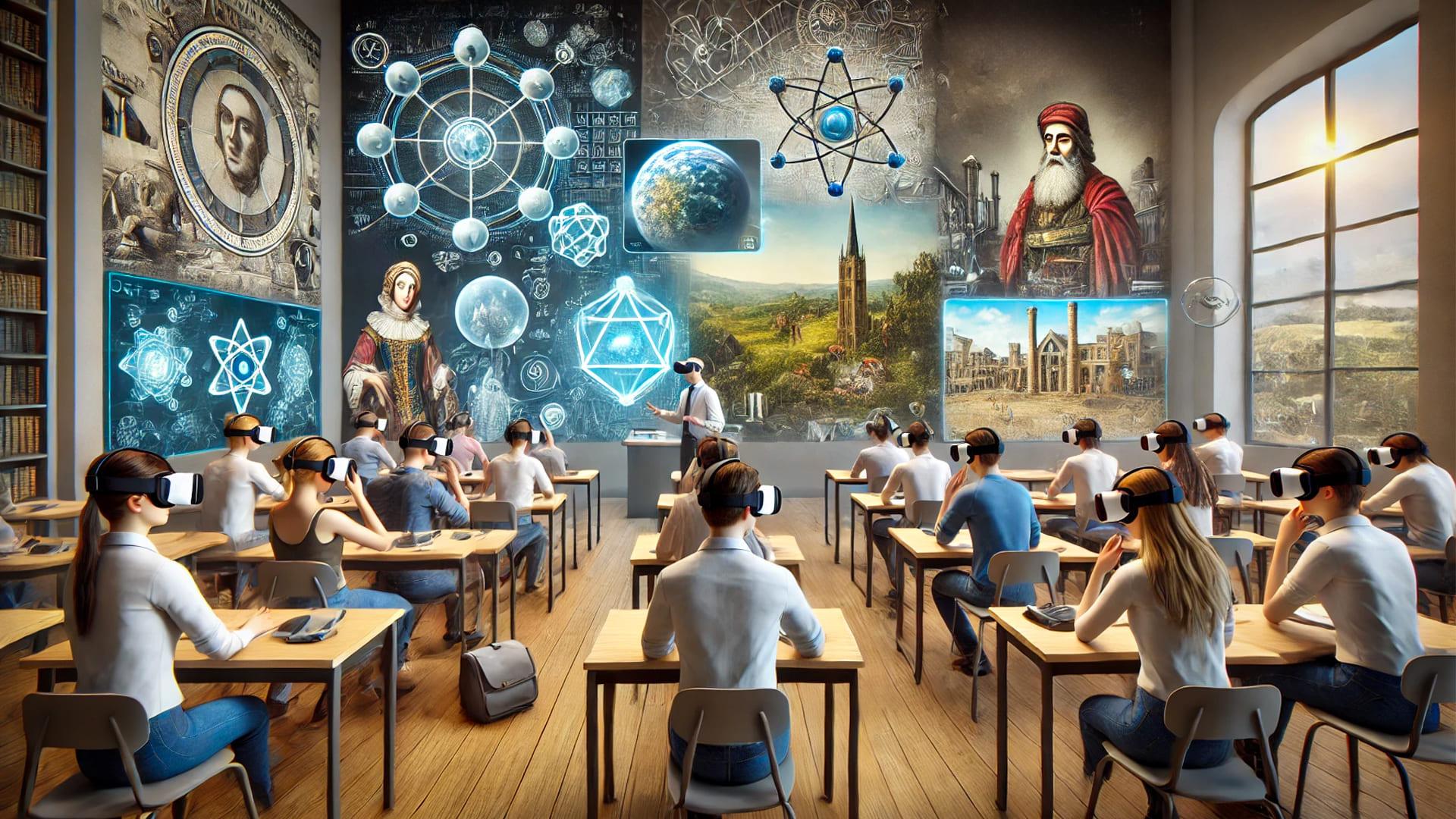
Revolutionizing Education: How VR/AR Immersive Learning Transforms Modern Classrooms
The classroom of the future is no longer a distant dream — it’s becoming a reality today, thanks to rapid advancements in immersive technologies. Virtual Reality (VR) and Augmented Reality (AR) in education are revolutionizing the way students learn, interact, and experience lessons. With VR/AR immersive learning,modern classrooms are breaking down conventional barriers and empowering educators to create an engaging,interactive,and inclusive educational surroundings. In this article, we’ll explore how VR/AR is transforming education, discuss its benefits, share practical tips, and look at real-world examples that highlight its impact.
What is VR/AR Immersive Learning?
Immersive learning leverages cutting-edge technologies like Virtual Reality and augmented Reality to create interactive and lifelike educational experiences. While VR places users inside a fully virtual environment — often using headsets — AR overlays digital data onto the real world, typically via smartphones, tablets, or smart glasses. By adding these layers of interactivity and immersion, educators can transform dull textbooks into vibrant learning experiences that resonate with today’s tech-savvy students.
- VR (Virtual Reality): Fully immersive experience; suitable for simulations or exploring impossible-to-visit environments (e.g., space, historical events, anatomy).
- AR (Augmented Reality): Enhances the real-world environment with digital overlays, ideal for interactive exercises and hands-on applications.
The Benefits of VR/AR in Modern Classrooms
Integrating VR/AR immersive learning into education has made a profound impact on classrooms across the globe. Here are some of the key benefits:
- Enhanced Engagement: Immersive environments captivate students’ attention and promote active participation. Lessons come to life, increasing both curiosity and retention.
- Experiential learning: Students can “walk” through ancient cities, dissect virtual frogs, or experience historical events firsthand, resulting in deeper understanding.
- Personalized Education: Interactive VR/AR modules adapt to each student’s learning speed and style, allowing for tailored instruction and immediate feedback.
- Improved accessibility: VR/AR tools can cater to diverse learning styles and accommodate students with disabilities by offering varied formats and sensory inputs.
- Safe, Risk-Free Learning: Simulations enable students to practice risky or costly tasks (like chemistry experiments or medical procedures) without real-world consequences.
- Global Classroom Collaboration: Learners from diffrent locations can join the same virtual classroom, breaking down geographical and social barriers.
- Boosted Creativity and Critical Thinking: Problem-based AR experiences and virtual worlds foster 21st-century skills like creativity, collaboration, and innovation.
VR/AR Immersive Learning: Key Applications
- Virtual Field Trips: Explore the pyramids of Egypt or the International Space Station without leaving the classroom.
- STEM Simulations: Conduct science experiments, visualize mathematical concepts, and manipulate 3D models for engineering and technology education.
- Language Learning: Practice new languages in immersive real-world scenarios, improving vocabulary retention and pronunciation.
- Special Education: Cater to diverse needs with customizable, multisensory support that adapts for all learners.
- Medical and Vocational Training: Simulate surgeries, diagnose patients, or hone technical skills—helpful in both secondary and higher education settings.
Case Studies: VR/AR Success Stories in Education
1. Google Expeditions: Virtual Field Trips
Google Expeditions brought VR-based field trips to thousands of schools worldwide. Using inexpensive headsets and smartphones, students toured far-flung locations, historical sites, and even ventured underwater. Teachers reported a noticeable increase in engagement and understanding of complex topics as students explored these immersive VR environments.
2. Labster: Simulated Science Labs
Labster provides interactive 3D science labs using VR/AR technology, allowing students to practice experiments that might potentially be unsafe or too expensive in real life. Schools employing Labster saw improved learning outcomes and higher test scores, especially in STEM subjects.
3.AR Anatomy Apps
Many medical and biology programs now use AR anatomy apps. For example, HoloAnatomy by case Western Reserve University enables students to interact with 3D models of the human body overlaid onto physical spaces, drastically improving learning efficiency compared to traditional textbooks.
first-Hand Experience: Immersive Learning Changes Lives
“When I first stepped into a VR simulation of a World War I trench, history felt real to me for the first time. I could see, hear, and even feel the tension. It didn’t just make me remember facts; it made me understand their impact.” — High school student, UK
Teachers and students consistently report that VR/AR immersive learning experiences foster empathy, connection, and long-term retention. These tools ignite passion for subjects that students previously found challenging or disengaging.
How to Integrate VR/AR Immersive Learning in Your Classroom
- Start Small: Begin with affordable AR mobile apps or basic cardboard VR viewers to gauge student interest and identify suitable subjects.
- Choose the Right Content: Opt for high-quality educational VR/AR resources that align with your curriculum. Popular platforms include Nearpod VR, Google Expeditions, and Merge Cube.
- Train Educators: Provide professional advancement for teachers so they’re comfortable with the technology and can integrate it meaningfully.
- Promote Collaboration: Encourage group activities and discussions in virtual experiences to enhance social learning and teamwork.
- Assess Impact: Monitor student engagement and outcomes to measure effectiveness and make improvements.
Tip: Always consider privacy and accessibility. Choose solutions that comply with student data protection laws and accommodate all learners.
Overcoming Challenges: Ensuring Success with VR/AR in Education
While the benefits are immense, integrating immersive technology can pose challenges:
- Cost: Hardware and software can be expensive, but many solutions (like Google Cardboard or AR mobile apps) are budget-amiable.
- Tech Support: Schools need reliable Internet and IT support for smooth implementation.
- content Quality: Not all educational apps are created equal. Choose those with proven track records and evidence-based results.
- Teacher Training: Ongoing professional development is crucial to ensure that educators maximize the technology’s potential.
By addressing these challenges with strategic planning and a phased approach, schools can successfully harness the power of VR/AR learning technologies.
The Future of Education is Immersive
As VR/AR hardware becomes more affordable and content libraries expand, immersive learning will become an essential part of modern education. Future classrooms will blend in-person, virtual, and augmented experiences to create rich, flexible, and truly global educational environments.
- Hybrid learning: Students will switch seamlessly between physical and virtual spaces.
- AI-Driven personalization: Adaptive VR/AR environments will tailor lessons to individual needs.
- Wider Collaboration: Expect to see more cross-border projects and interdisciplinary teamwork — all within immersive digital worlds.
The revolution is happening now—teachers, administrators, and parents who embrace VR/AR immersive learning today are preparing students for an innovative tomorrow.
Conclusion
Integrating VR and AR into classrooms is more than just a trend—it’s a paradigm shift in the way we teach and learn. Immersive learning enhances student engagement,deepens understanding,and breaks traditional barriers,empowering learners and educators alike. As we move forward, embracing these technologies will be crucial for providing equitable, effective, and memorable education experiences for all. The classroom of tomorrow is immersive, accessible, and inspiring—let’s step into the future, one virtual lesson at a time.