
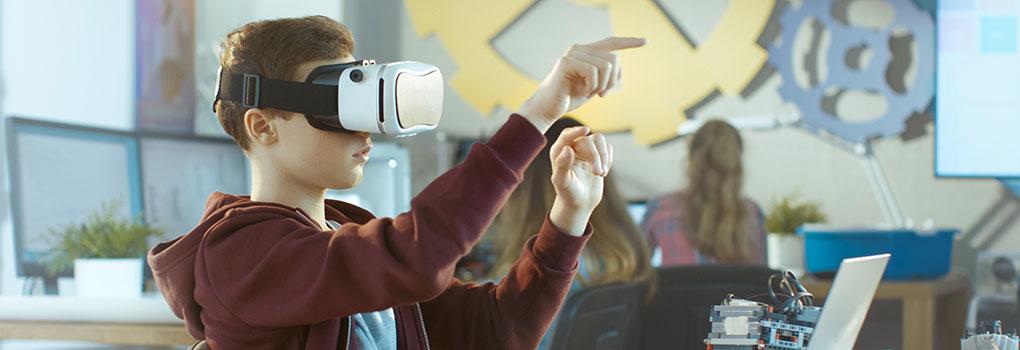
Revolutionizing Education: How VR/AR Is shaping Immersive Learning Experiences
Education is undergoing a seismic shift. With the rise of virtual reality (VR) and augmented reality (AR), students and educators worldwide have begun to experience learning like never before—immersive, interactive, and deeply engaging.in this extensive guide, we’ll explore how VR and AR are revolutionizing classrooms, examine their tangible benefits, share inspiring case studies, and offer practical tips for integrating these technologies into your learning surroundings.
What Are VR and AR in Education?
Before we dive into the transformative impact,let’s clarify the terms:
- Virtual Reality (VR) immerses users in a fully simulated digital environment,usually delivered through headsets like Oculus Rift or Meta Quest.
- Augmented Reality (AR) overlays digital elements onto the real world, frequently enough via smartphones or tablets—think interactive models or real-time information appearing with a lens or camera.
Both technologies create immersive learning experiences, driving engagement and retention beyond customary textbooks or lectures.
Key Benefits of Immersive Learning with VR/AR
The integration of VR/AR in education unlocks notable advantages for students, teachers, and institutions. Here’s how:
- Enhanced Engagement: Interactive simulations grab student attention and spark curiosity.
- Deeper Understanding: Complex subjects (like anatomy,physics,or history) come to life through 3D models and virtual field trips.
- Safe Practice Environments: Students can practice surgical techniques, solve engineering problems, or conduct chemistry experiments risk-free.
- Learning Without Borders: VR and AR dissolve geographical constraints,providing educational experiences to remote learners worldwide.
- Personalized Learning: Adaptive VR/AR programs can respond to individual learning speeds and styles.
- Collaboration and Social Skills: multi-user VR environments foster teamwork, dialog, and real-time collaboration.
Case Studies: How VR/AR Is Transforming Education
1. Medical Schools: Simulated Surgery and Anatomy
institutions such as Stanford University and The university of Oxford use VR simulations to train future doctors. Students don headsets to explore human anatomy in 3D, perform virtual dissections, and practice complex surgery. Error-free repetitions lead to higher skill retention and confidence before real-world request.
2. K-12 Classrooms: Virtual Field Trips and STEM Labs
The use of AR apps like Google Expeditions allows elementary and high school students to embark on virtual journeys: from walking on the surface of Mars to exploring the ancient pyramids of Egypt. In STEM classrooms, AR brings math equations and scientific processes into interactive 3D space, transforming abstract concepts into tangible experiences.
3.Language Learning: Real-Life Practice
Language students at institutions partnered with VR platforms (such as ENGAGE or Immerse) practice conversational skills inside virtual cafes, markets, or social scenarios. This reduces anxiety and builds fluency faster than traditional classroom conversation drills.
First-Hand Experience: A Student’s Perspective
“I was always nervous about chemistry labs. When our school introduced AR overlays for our experiments, everything changed,” shares Sarah Lopez, a high-school student.”Instead of reading instructions on paper,I watched interactive guides through my tablet. It felt like having a tutor over my shoulder. Plus, in VR lab setups, I practiced risky reactions in a safe environment. My grades—and my love for science—skyrocketed.”
Practical Tips for Integrating VR/AR in Your Classroom
Ready to embrace immersive learning? Here are actionable steps to get started:
- Identify goals: Define your learning objectives. Will VR/AR be used for skill advancement, knowledge visualization, or engagement?
- Select the Right Platform: Research age-appropriate VR/AR platforms (e.g., zSpace for STEM, Nearpod VR for general education).
- Start Small: Pilot with a single lesson or module before expanding full curriculum integration.
- Train Staff: Offer professional development to educators, ensuring comfort with technology and facilitation skills.
- Focus on accessibility: Choose devices and software that accommodate all learners, including those with disabilities.
- Gather Feedback: Collect student and teacher input to continually refine learning experiences.
challenges and Solutions in VR/AR Adoption
implementing immersive learning comes with hurdles—but innovative solutions are emerging:
- Cost Concerns: While initial investments are high, prices for VR/AR equipment continue to drop. schools can access grant funding, or explore shared device programs.
- Technical Limitations: ensure robust WiFi and adequate hardware. Cloud-based VR applications and browser-based AR tools make access easier.
- Curriculum Alignment: work with content creators who can integrate state standards and requirements into immersive modules.
- Health & Safety: Set clear usage guidelines to prevent eyestrain and motion discomfort. Encourage regular breaks and monitor student well-being.
The Future of Immersive Learning: What’s Next?
Experts predict exponential growth in VR and AR adoption—and new opportunities ahead:
- AI Integration: Artificial intelligence will personalize virtual lessons based on individual progress and style.
- Expanded Content Libraries: More curriculum-aligned modules will become available across subjects and grade levels.
- Cross-Institution Collaboration: universities and schools will build joint VR campuses, fostering global classroom exchanges.
- Increased Accessibility: Technologies will evolve to support visually or physically impaired learners with customizable interfaces.
Soon, immersive learning may be the norm, not the exception.
SEO Tips: Elevating Your EdTech Content
If you’re an education blogger, administrator, or EdTech provider, here’s how to maximize search engine visibility for VR/AR topics:
- Use target keywords such as immersive learning, VR in education, AR classroom technology, and virtual reality teaching tools naturally in your content.
- Incorporate related semantic phrases, e.g., interactive education technology, augmented reality lesson plans, and future of education technology.
- Optimize headings (H1, H2, H3), add compelling meta descriptions, and structure posts with readable paragraphs and bullet points.
- Embed internal links to other relevant EdTech articles and resources.
- Use visually engaging images, infographics, and videos showcasing VR/AR in action—these boost SEO and reader engagement alike.
Conclusion: The New Era of Education
The journey from chalkboard lectures to immersive VR/AR experiences marks one of the most exciting evolutions in education history. As virtual reality and augmented reality technologies become more accessible, students from every background can engage in learning environments that are interactive, intuitive, and inspiring. Whether you’re an educator looking to boost engagement, a student curious about next-gen learning, or an administrator planning for the future, the revolution is already underway.
Ready to join the movement? Start small, stay curious, and embrace the incredible potential of VR/AR in education. Together, let’s shape a more immersive, effective, and inclusive future for learners everywhere.