
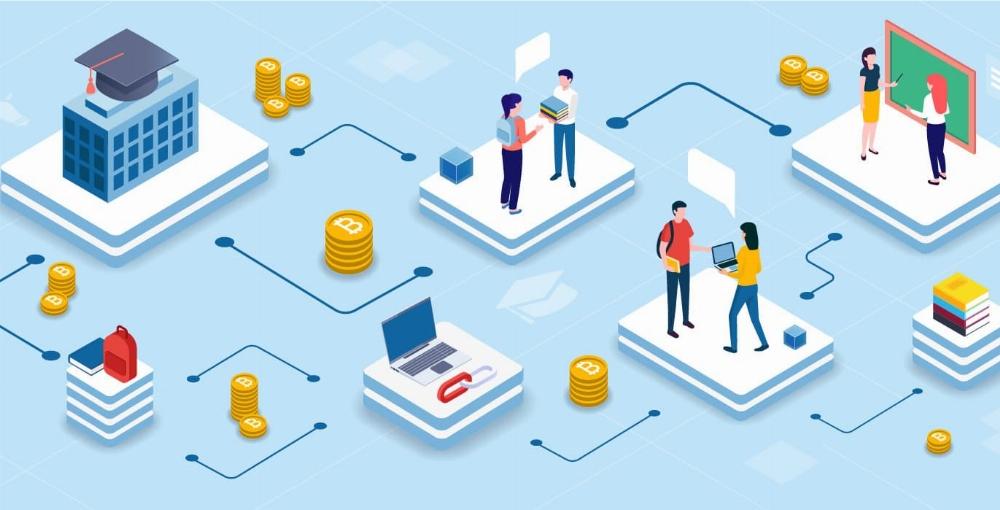
Revolutionizing Higher Education: Case Studies Showcasing Blockchain Success
The rapid evolution of blockchain technology has sent ripples across industries worldwide, and higher education is no exception. By offering secure, obvious, and tamper-proof solutions, blockchain is swiftly becoming a cornerstone in modernizing how academic institutions operate and serve both students and stakeholders.
In this article,we dive deep into how universities and colleges are harnessing blockchain in higher education. Through compelling case studies, we’ll uncover real-world examples, practical benefits, first-hand experiences, and actionable tips to inspire educational leaders, policymakers, and technology enthusiasts alike.
Why Blockchain in Higher Education?
At its core, blockchain is a decentralized and distributed digital ledger, best known for powering cryptocurrencies. Though, its potential goes far beyond digital money. Educational institutions are now leveraging blockchain to address long-standing challenges, including:
- Credential fraud and verification delays
- Complexity of credit transfers and recognition
- lack of transparency in academic achievements
- Secure storage and sharing of educational records
- Streamlining administrative processes
“Blockchain is revolutionizing the education sector by making credentials permanent, portable, and trusted.”
Benefits of blockchain Technology in Higher Education
- Immutable academic Records: Once credentials are entered onto the blockchain, they cannot be altered, reducing fraud instances.
- Seamless Verification: Employers, universities, and authorities can instantly verify qualifications, cutting down time and bureaucracy.
- Portable Digital Credentials: Students retain lifelong control over their diplomas, certificates, and achievements.
- Cost Savings: Automation and digitization streamline record-keeping, reducing manual administrative costs.
- Enhanced Security & Privacy: Sensitive data is encrypted and access is controlled, improving compliance with data protection regulations.
Case Studies: Blockchain Success in Higher Education
MIT’s Digital Diplomas Initiative
The Massachusetts Institute of Technology (MIT) broke new ground in 2017 by issuing blockchain-based digital diplomas to graduates. Using the Blockcerts open standard, MIT empowered students to share verifiable and tamper-proof credentials with employers globally—no more waiting for paper transcripts.
- Key Success: Over 2,000 students have securely received their digital diplomas since launch.
- outcome: Reduced administrative overhead, faster verification for employers, greater student autonomy.
The University of Nicosia: Pioneering Blockchain Degrees
The University of Nicosia in Cyprus is recognized globally as the first university to offer a full Master’s degree in Blockchain and Digital Currency.More importantly, it was also among the first to issue blockchain-verified academic certificates to its graduates.
- Key Success: Over 10,000 academic certificates issued via blockchain to date.
- Outcome: 100% authenticity rates; no reported diploma fraud since implementation.
Singapore’s SkillsFuture Initiative
The SkillsFuture Singapore (SSG) initiative,in collaboration with the country’s universities and polytechnics,rolled out a nationwide blockchain database called OpenCerts to store and verify educational certificates.
- Key Success: Over 500,000 certificates have been issued via blockchain since 2019.
- Outcome: Students and employers use a simple web tool to instantly confirm the legitimacy of credentials—boosting workforce confidence.
European Commission: Europass Digital Credentials
The European Commission launched Europass Digital Credentials Infrastructure,a blockchain-powered platform for issuing,storing,and sharing diplomas and certificates securely across EU member states.
- Key Success: Thousands of institutions and millions of learners can now share digital qualifications across borders with minimal barriers.
- Outcome: Facilitated mobility and recognition of learning outcomes throughout Europe.
First-Hand Experiences: Voices from Academia
“With blockchain, the burden of verifying my degree during job applications has vanished. Employers trust digital diplomas, and the whole process is seamless.”
— MIT Graduate, Class of 2019
Faculty members and administrators also report significant reductions in administrative bottlenecks and paperwork. Such as:
- Automated verification requests free up valuable staff hours.
- International students face fewer obstacles in proving their qualifications abroad.
- Collaboration with employers and peer institutions is more agile and transparent.
practical Tips: Implementing Blockchain in Higher Education
- Identify High-Impact Use Cases: Start with issuing digital diplomas, certificates, or transcripts—areas where fraud is a concern and verification is frequent.
- Choose the Right Blockchain Platform: Evaluate options like Blockcerts, OpenCerts, or custom solutions tailored to your institution’s needs.
- Prioritize Data Security & Compliance: Ensure compliance with data privacy laws (e.g.,GDPR) and select technologies that encrypt and secure sensitive data.
- Engage Stakeholders Early: Get buy-in from faculty, administration, IT departments, and students to ensure smooth integration.
- Pilot Before Scaling: Start with a small student group or one program. Collect feedback and iterate before full-scale deployment.
- Educate & Train: Provide resources and training for staff and students to familiarize them with blockchain benefits and processes.
Future Trends: The Road Ahead for Blockchain in Higher education
While credentialing is the primary application, blockchain in higher education is set to expand even further. Exciting trends on the horizon include:
-
Decentralized Learning Pathways:
Students will curate education from different providers, with their achievements stored securely on blockchain, creating unique academic identities.
-
Smart Contracts for Tuition and Grants:
Automated tuition payments, scholarships disbursements, and grant management using blockchain-based contracts.
-
Lifelong Learning Records:
Comprehensive digital portfolios tracking learning and skills across formal, informal, and workplace education.
Conclusion: Embracing Blockchain for a Modern Academic Experience
As these blockchain case studies in higher education demonstrate, the technology is more than hype—it’s a practical, scalable, and secure solution to many entrenched challenges faced by universities and students globally.
By embracing blockchain,educational institutions can truly revolutionize higher education—delivering credentials that are trusted,portable,and future-proof.Whether you’re an administrator, an educator, or a student, now is the time to explore how blockchain can elevate learning outcomes and operational efficiency.
Are you ready to be part of this digital conversion?