
Safeguarding Schools: Top Strategies for Cybersecurity in Educational Institutions
In today’s digital era, educational institutions are increasingly reliant on technology for classroom learning, administration, and communication. However, this dependence also exposes schools to escalating cybersecurity threats. From ransomware attacks on networks to phishing scams targeting staff and students, schools must proactively defend their digital assets. In this comprehensive guide, we’ll explore the most robust cybersecurity strategies for schools, practical tips, real-world examples, and actionable steps to ensure a resilient and secure educational surroundings.
Why Cybersecurity is Crucial for Educational Institutions
Educational institutions are custodians of sensitive data, including student records, personal facts, financial details, and academic resources. A successful cyber attack can lead to:
- Data breaches compromising confidential information
- Disruption of academic schedules and online learning platforms
- Financial loss due to ransomware and fraud
- Reputation damage, leading to loss of trust among parents, students, and staff
- Legal consequences, including non-compliance with data protection regulations
Given these risks, robust school cybersecurity strategies are not just a proposal—they are a necessity.
Top Cybersecurity Threats Facing Schools
- Ransomware Attacks: hackers encrypt school data and demand a ransom for its release.
- Phishing Scams: Fraudulent emails that trick staff or students into revealing sensitive information.
- Unsecured Devices and Networks: Lax security settings on classroom devices and wi-fi networks.
- Data Leaks: Unintentional or malicious exposure of student or staff information.
- Social Engineering: Manipulating people into bypassing security through psychological tricks.
Top Strategies for Cybersecurity in Educational Institutions
Implementing a layered approach to cybersecurity is key for protection. Hear are proven strategies every school should consider:
1. Conduct Regular Cybersecurity Training
- Educate teachers, staff, and students on identifying phishing emails and scams.
- Use real-world scenarios and simulations for hands-on learning.
- Make training a routine part of school operations, with refresher courses annually.
2. Employ Strong Authentication Methods
- Implement multi-factor authentication (MFA) for all accounts and systems.
- Enforce strong password policies and educate users on creating unique passwords.
- enable automatic account lockouts after suspicious login attempts.
3.Secure Networks and Endpoints
- Segment school networks to limit access to sensitive data.
- Encrypt wireless networks and change default router credentials.
- Install endpoint security solutions such as anti-virus and anti-malware on all devices.
4. Keep Software and Systems Updated
- Regularly update operating systems, applications, and all digital learning tools.
- Automate patch management where possible to reduce oversight.
- Limit or disable outdated software prone to vulnerabilities.
5. Back Up data Frequently
- Schedule automatic backups for critical data, both onsite and in secure cloud storage.
- Test backups regularly to ensure reliability during recovery.
- Encrypt backups to prevent unauthorized access.
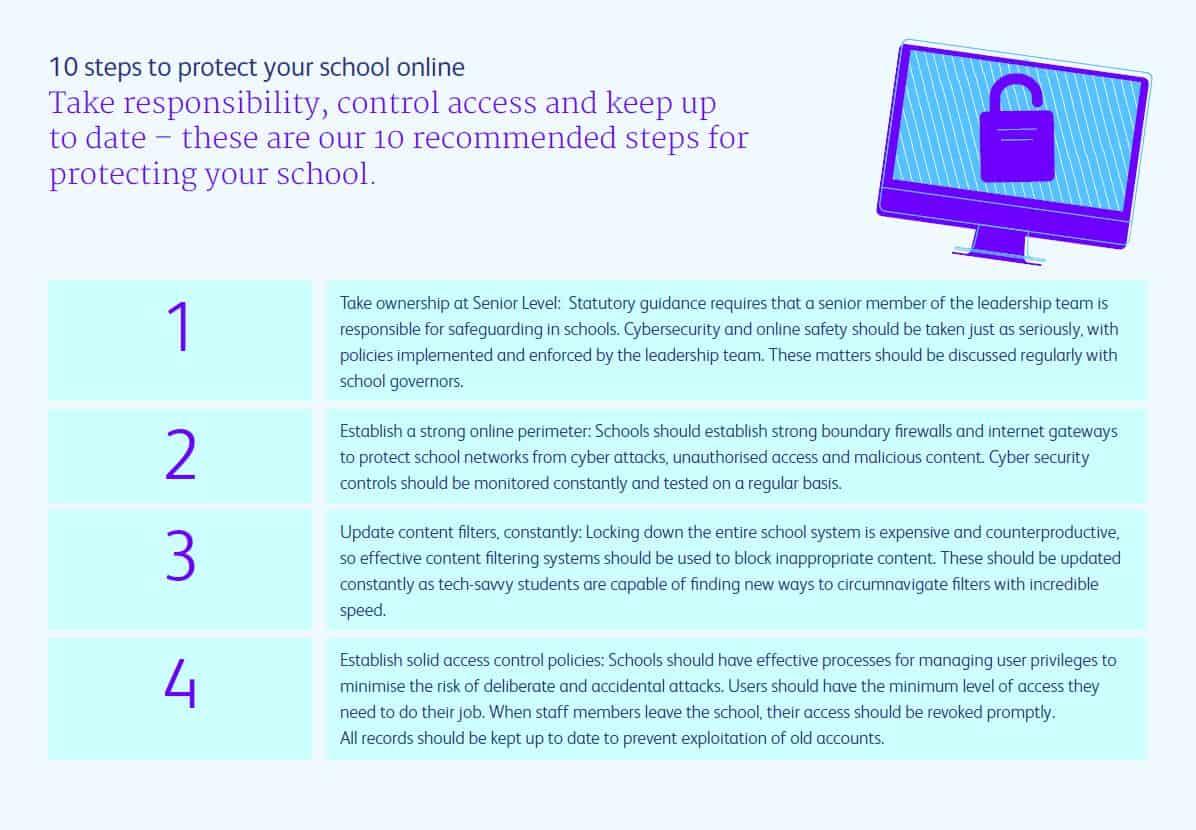
6. Limit User Access and Privileges
- Apply the principle of least privilege—only necessary personnel get access to sensitive data.
- Review user roles and permissions routinely.
- Quickly revoke access for former employees or students.
7. Establish a Clear Cybersecurity Policy
- Develop and document an easy-to-understand security policy covering rules, acceptable use, and protocols.
- Make policies accessible to the entire school community.
- Update policies as new threats and technologies emerge.
Benefits of Prioritizing Cybersecurity in Schools
- Protects sensitive student and staff information from breaches
- Ensures continuity of learning with minimal disruption
- Builds trust among parents, students, and faculty
- Maintains compliance with legal data protection requirements
- Prevents costly recovery efforts after an attack
Practical Cybersecurity Tips for Schools
- Regularly audit user accounts: Identify and remove unused or suspicious accounts.
- Monitor network activity: use intrusion detection systems (IDS) and alerts for unusual access patterns.
- Educate with age-appropriate material: Tailor cybersecurity lessons for different age groups.
- Encrypt student communication platforms: Secure chat and email systems used in virtual learning.
- Foster a security mindset: Encourage the entire school community to report suspicious incidents without fear.
Real-World Case Studies: Lessons Learned
Case Study 1: Ransomware Attack Disrupted Virtual Learning
In 2021, a large public school district experienced a ransomware attack that forced the closure of virtual classrooms for days. Sensitive staff records were stolen, and the district paid a hefty ransom. Post-attack, the district implemented enhanced backup systems, staff training, and stricter network segmentation—demonstrating the importance of proactive preparedness.
Case Study 2: Phishing Email Compromises Student Data
A private school fell victim to a phishing scam when an employee unknowingly shared login details. Hackers accessed a database of student records, resulting in a costly recovery.The school responded by mandating MFA and implementing routine training sessions.
First-Hand Experience: A Teacher’s Perspective
“After discovering our shared drive was compromised, our team underwent cybersecurity training. Now, I double-check email links, update passwords often, and remind students about online safety. It’s made all the difference—our culture is more security-aware, and incidents are way down.”
— Mrs. J. Collins, Middle School Teacher
How to Get Started: Implementing Cybersecurity in Your School
- Assess your current security posture by conducting a risk assessment.
- Develop or refine your cybersecurity policy with input from IT professionals.
- Roll out cybersecurity awareness training for all staff and students.
- Invest in the right technology tools for network protection, backup, and monitoring.
- Schedule regular reviews and adapt policies as new threats emerge.
For further guidance, consider consulting trusted cybersecurity firms or leveraging resources from agencies such as CISA and the U.S. Department of Education.
Conclusion
The importance of cybersecurity in educational institutions cannot be overstated. With the rise of digital learning and online administration,schools have become high-value targets for cybercriminals. By implementing these top cybersecurity strategies, providing ongoing training, and fostering a culture of security, schools can protect students, staff, and the integrity of their educational mission. Don’t wait for an attack to act—proactive measures today ensure a safer academic tomorrow.