
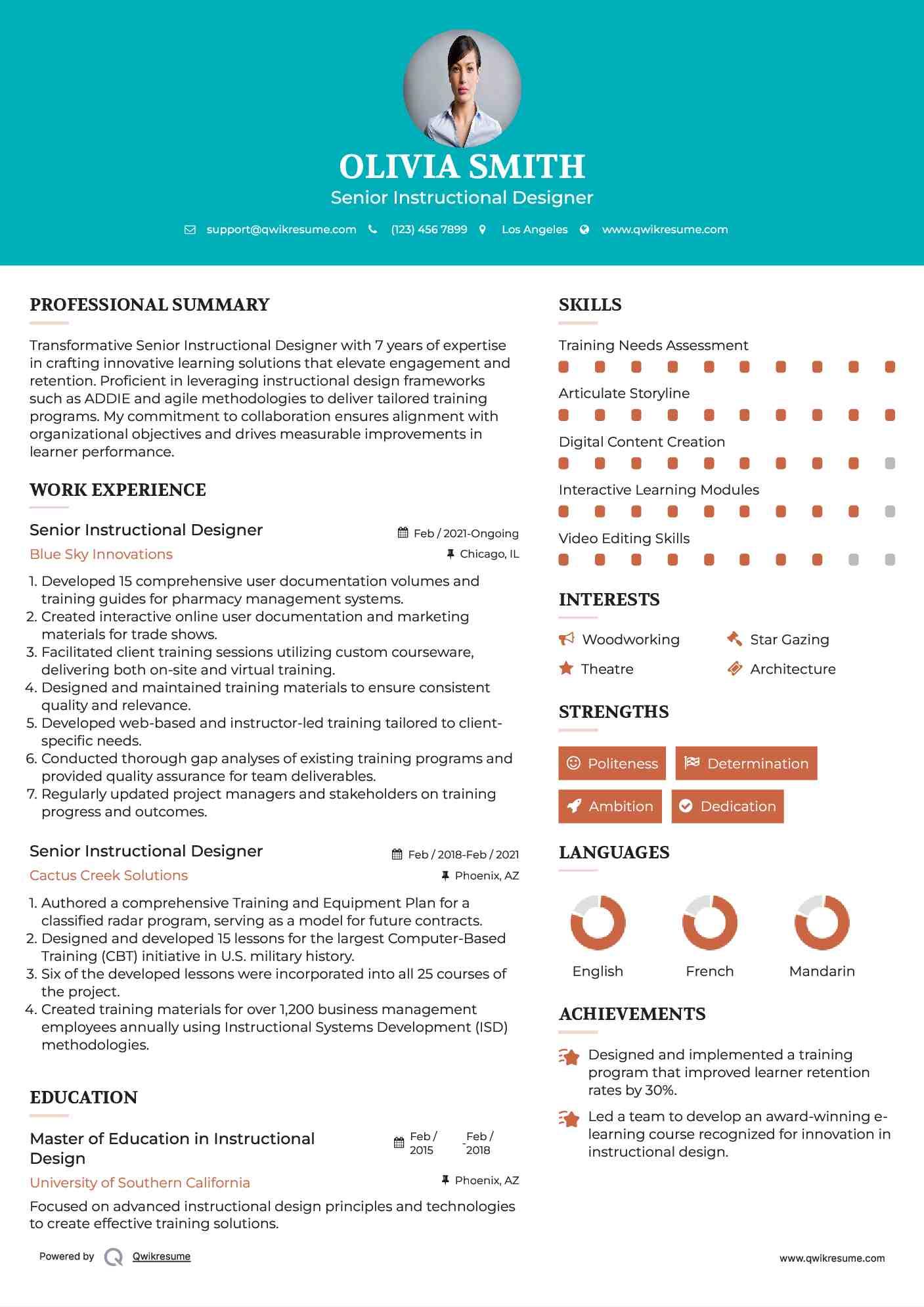
Senior Instructional Designer: Key Responsibilities, Skills, and Career Path Insights
Are you passionate about educational transformation through technology? The role of a Senior Instructional Designer at universities, colleges, or schools could be your perfect career path. As educational institutions accelerate digital learning, experienced instructional designers are in high demand to design effective, engaging, and innovative course experiences. In this article, we’ll explore what it means to be a Senior Instructional designer in education technology, the core responsibilities, vital skills, benefits, and practical career insights to help you succeed in this exciting field.
What Does a Senior Instructional Designer Do?
A Senior Instructional Designer plays a pivotal role in developing high-quality learning experiences using technology. This position typically collaborates with faculty, subject matter experts, digital media developers, and IT teams to create curricula, online courses, hybrid learning models, and digital assessments that adhere to pedagogical best practices.
- Strategic Course Design: create standards-based curriculum using instructional design models (like ADDIE, SAM, or Backward Design).
- Technology Integration: Select and implement educational technologies (such as LMS platforms, authoring tools, interactive simulations).
- Faculty/Staff Training: Provide coaching and professional development to instructors on best practices in digital teaching and learning.
- Project Management: Lead multi-disciplinary teams through complex course development projects, meeting institutional goals and timelines.
- Quality Assurance: Ensure courses comply with accessibility standards,academic integrity policies,and quality assurance frameworks like Quality Matters.
- Assessment & analytics: Develop effective assessment strategies and use learning analytics data to enhance instruction.
key Responsibilities of a Senior Instructional Designer
While the specific duties may vary between universities, colleges, or K-12 schools, a Senior Instructional designer typically handles the following core responsibilities:
1. Curriculum Development & Evaluation
- Analyze learning needs and goals of students and educators.
- Design curriculum maps, instructional activities, and assessment tools aligned with learning outcomes.
- evaluate and revise courses based on feedback, data, and institutional objectives.
2. Collaboration with Stakeholders
- Consult with faculty,instructional technologists,librarians,and assessment specialists.
- Act as a liaison between academic departments and central IT or e-learning units.
3. Implementation of Educational Technologies
- Identify and recommend digital tools to enhance learning engagement and retention.
- Configure Learning Management Systems (LMS), video platforms, and content authoring software.
4. Professional Development and Training
- Train faculty and staff in new technologies, instructional strategies, and accessibility standards.
- Develop training materials, user guides, and online tutorials.
5. Project and Change management
- Manage timelines, budgets, and resources for course design projects.
- Lead workshops, user groups, or pilot programs for new educational initiatives.
Essential Skills for a Senior Instructional Designer
To succeed as a senior Instructional Designer in education technology, you’ll need a blend of technical, pedagogical, and interpersonal skills. Here are the most in-demand skills for this role:
- Instructional Design Expertise: Mastery of course design models, adult learning theory, and assessment techniques.
- Technical proficiency: Familiarity with a variety of e-learning development tools (e.g., Articulate Storyline, Captivate, Canvas, Blackboard).
- Project Management: Ability to plan, execute, and track multiple projects together.
- Interaction: Strong written and verbal skills for collaborating with diverse teams and delivering presentations.
- Analytical Skills: Comfort with data-driven decision making and learning analytics.
- Adaptability: versatility to learn new tools and adapt strategies to different learning environments.
- Creativity: Innovative problem-solving in designing engaging, interactive content.
- Knowledge of Accessibility Standards: Practical understanding of ADA, WCAG, and worldwide design for learning (UDL) principles.
Education and Qualifications
many Senior Instructional Designers hold advanced degrees as well as professional certifications. Common qualification requirements include:
- Education: A master’s degree or higher in instructional design, education technology, curriculum development, or a related field.
- Experience: At least 4-7 years in instructional design or a comparable role, preferably within higher education or K-12 institutions.
- Certifications: credentials such as Certified Professional in Learning and performance (CPLP), ATD certification, or QM Course Reviewer certification are highly valuable.
Benefits of Becoming a Senior Instructional Designer in Education Technology
Choosing a career as a Senior Instructional Designer at a university, college, or school offers numerous professional and personal benefits:
- Impactful Work: Shape the learning experiences of thousands of students, directly influencing their educational outcomes.
- Continuous Learning: Opportunities to stay at the cutting edge of pedagogical research and digital innovation.
- Leadership Pathways: Increased obligation and visibility can pave the way to leadership roles such as Director of Instructional Technology or chief Learning Officer.
- Job Stability and Growth: Educational institutions increasingly rely on educational technology experts, ensuring robust career prospects.
- Flexible work Environments: Many institutions offer hybrid or remote work, especially for digital learning positions.
Career Path and Advancement Opportunities
A Senior instructional Designer’s career development in education technology can take several rewarding directions:
- leadership Roles: Progress to roles like Instructional Design Manager, Director of e-Learning, or Lead Learning Experience Designer.
- Specializations: Focus on areas such as gamification, adaptive learning, mobile learning, or digital accessibility.
- Consultancy: transition into freelance educational technology consulting, supporting multiple institutions.
- Research & Teaching: Engage in scholarly research or teach instructional design in graduate programs.
Practical Tips for Aspiring Senior Instructional Designers
- Build a Robust Portfolio: Assemble a professional portfolio with sample courses, storyboards, and instructional videos to showcase your expertise.
- Stay Current: Regularly attend webinars, conferences, and pursue continuous learning in edtech trends and new technologies.
- Network: Engage with professional organizations and educational technology communities to expand your opportunities.
- Focus on collaboration: Highlight successful cross-functional projects and your ability to lead teams in your resume and interviews.
- Demonstrate Measurable Impact: Provide data and outcomes from your course designs to demonstrate value to hiring committees.
Conclusion
The role of a Senior Instructional Designer in education technology is both challenging and rewarding.With the increasing demand for high-quality digital learning experiences at universities, colleges, and schools, your expertise will play a crucial role in shaping the future of education. By honing your instructional design skills, embracing new technologies, and consistently demonstrating leadership, you’ll be well-positioned for personal and professional success in this vibrant field. If you’re looking to make a lasting impact on education through innovation,a career as a Senior Instructional Designer could be your ideal next step.