
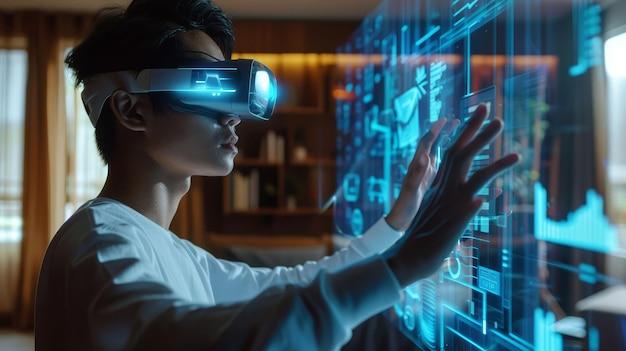
The Future of Augmented Reality in Textbooks: Revolutionizing Learning Through Interactive Technology
In the rapidly evolving world of education,augmented reality in textbooks is emerging as a groundbreaking technology poised to revolutionize the way students learn. By blending digital content with the physical textbook, augmented reality (AR) transforms passive reading into an interactive, immersive experience. As schools and universities across the globe experiment with interactive learning technologies, AR stands out as a catalyst for deeper understanding and engagement.
In this article, we explore the future of augmented reality in textbooks, considering its impact, benefits, real-world case studies, and practical tips for educators and publishers eager to join this digital revolution.
What is Augmented Reality in Textbooks?
Augmented reality in textbooks integrates digital information—such as 3D models, animations, videos, and quizzes—directly onto the pages of traditional print books or digital e-textbooks. By scanning images or QR codes using a smartphone, tablet, or AR glasses, students unlock supplementary content that brings complex concepts to life.
- Interactive diagrams that respond to touch or gestures
- Instant access to videos, simulations, or step-by-step tutorials
- Real-time quizzes and instant feedback mechanisms
- Virtual lab experiments and immersive field trips
this approach extends beyond simple visualization, encouraging hands-on participation and enhancing student engagement with course material through interactive technology.
Why Augmented Reality is the Future of Interactive learning
The significance of augmented reality in education lies in its ability to bridge the gap between traditional learning and the demands of today’s digital learners. Modern students are accustomed to multimedia content; AR leverages this by injecting textbooks with dynamic, real-time experiences.
Key Benefits of AR textbooks
- Enhanced Engagement: Interactive AR content captures attention and sustains curiosity longer than static text or images.
- Personalized Learning: AR adapts to students’ paces and provides tailored exercises, meeting diverse learning needs.
- Deeper Comprehension: Complex subjects—like human anatomy, physics, or history—come alive in 3D, aiding both visual and kinesthetic learners.
- Accessibility: AR can support learners with special needs,providing audio,tactile,or visual enhancements for inclusivity.
- Gamification: Educational games integrated via AR increase motivation and foster healthy competition.
- Cost effectiveness: One AR-enabled device can instantly update content, reducing the need for frequent textbook editions.
Studies consistently show that augmented reality in learning improves information retention and encourages collaborative learning—a key component in modern education standards.
Real-World Case Studies: augmented Reality Transforming Classrooms
Schools, universities, and publishers are already piloting AR textbook technologies. Here are a few standout examples:
-
Pearson’s AR-Enabled Science Textbooks:
By embedding AR codes, Pearson transforms biology and chemistry textbooks with interactive cell models and virtual lab experiments. These features substantially improved students’ test scores in pilot schools across the UK and US.
-
McGraw Hill Education’s Anatomy Textbooks:
AR-powered “virtual dissection” allows medical students to visualize layered human anatomy, rotate organs in 3D, and simulate surgical procedures—bridging the gap between theory and practice.
-
India’s ClassKlap and LEAD Schools:
Low-cost AR textbooks help rural students access digital learning without internet connectivity, democratizing quality education in remote areas.
-
The Smithsonian institution’s AR Book “Moonwalk”:
This interactive book lets readers experience the Apollo 11 mission through AR animations and astronaut perspectives, blending history and space science.
Testimonial: A Teacher’s Perspective
“Introducing AR into our science curriculum has been a game-changer. My students are more enthusiastic and eager to participate in class. Even complex topics like DNA replication are now fun and relatable!”
– Sarah Matthews, Middle School Science Teacher, Texas
Augmented Reality Textbooks: Benefits for Educators, Students, and Publishers
For Educators
-
Pre-built AR content saves time on lesson preparation
-
Teachers can track student progress with in-app analytics
-
Easy integration with Learning Management Systems (LMS)
For Students
-
Active participation in their own learning journey
-
Increased accessibility for different learning styles and abilities
-
Freedom to explore concepts at their own pace
For Publishers
-
Greater product differentiation in a competitive textbook market
-
Ability to offer dynamic content updates after publication
-
Valuable engagement analytics for product improvement
How to Integrate Augmented Reality in Your classroom or Curriculum
While the prospect of adopting AR technology in classrooms might seem daunting, implementation can be straightforward with thoughtful planning.Here are practical steps to guide educators and school administrators:
- Assess Your Needs: Identify subjects or lessons where AR could fill knowledge gaps or enhance engagement.
- Choose the Right Platform: Evaluate AR-enabled textbooks, apps, or platforms compatible with your devices and budget.
- Engage in Professional Development: Provide teachers with training sessions and support to ensure smooth integration.
- Start Small: Pilot AR content in a single class or unit before wider roll-out.
- Collect Feedback: Use student and teacher feedback to tweak lesson plans and AR usage for maximum impact.
Top AR Educational Platforms:
- Merge Cube
- Google Expeditions
- Zspace
- Kolabtree AR Books
Always ensure your school’s IT infrastructure can support the chosen AR solution, and consider accessibility for students with special needs.
Overcoming Challenges: what’s Next for AR in Education?
As promising as AR textbooks are, certain challenges remain:
- Device Availability: Not all students have access to suitable AR-enabled devices at home.
- Content Quality: The effectiveness of AR hinges on high-quality, curriculum-aligned content.
- Teacher Training: Prosperous AR integration depends on teacher comfort and skill with the technology.
- Cost: Initial investment in AR textbooks and related hardware may be notable for some institutions.
The future lies in collaborative development between educators, publishers, and technology companies to produce affordable, scalable, and effective AR textbook solutions. As AR hardware—such as tablets and smart glasses—becomes cheaper and more accessible, expect wider adoption in schools worldwide.
Conclusion: The Promise and Potential of Augmented Reality in Textbooks
The future of augmented reality in textbooks is radiant. By merging the best of physical and digital learning, AR is set to create classrooms that are collaborative, personalized, and more engaging than ever before. As technology advances and educational stakeholders work together, AR in textbooks will no longer be a novelty, but a necessity for 21st-century education.
Whether you’re an educator, student, or publisher, embracing augmented reality in your learning journey today is an investment in a smarter, more connected tomorrow.