
The Future of Augmented Reality in Textbooks: Revolutionizing Learning Through Technology
Imagine opening a science textbook and watching a beating heart emerge above the page, or exploring the pyramids of Egypt in 3D from your desk. With augmented reality in textbooks, these scenarios are no longer science fiction—they’re the future of education. As technology continues too evolve, augmented reality (AR) is poised to transform customary learning methods, making education more interactive, engaging, and effective. In this article, we’ll explore the future of AR in textbooks, its benefits, case studies, practical implementation tips, and what educators, students, and publishers can expect in this rapidly evolving landscape.
What is Augmented Reality in Textbooks?
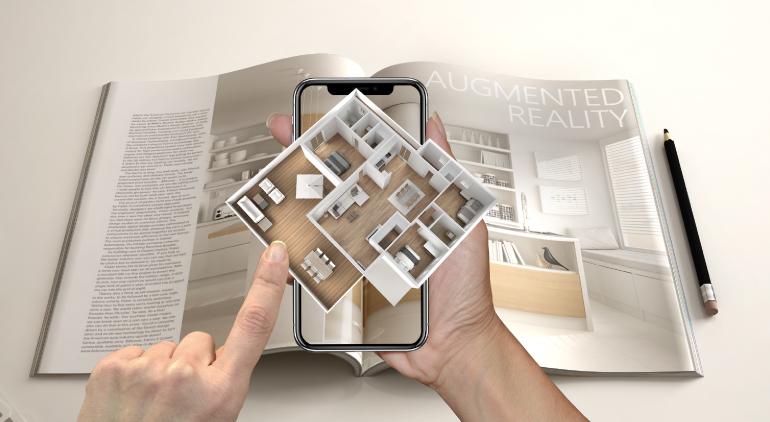
Augmented reality in textbooks integrates digital information—videos, animations, interactive 3D models—into traditional print materials. Using a smartphone, tablet, or AR glasses, students scan specific images or codes in the textbook to activate digital content, enriching the learning experience significantly.
- Visual learners can see concepts come alive with animations.
- Kinesthetic learners can interact with 3D models and simulations.
- Auditory learners benefit from embedded audio explanations and narrations.
The Evolution of Educational Technology
Education has always been influenced by technological advancements, from chalkboards to projectors and now e-learning platforms. Augmented reality technology is set to be the next big leap. Unlike virtual reality (VR), which creates an entirely separate digital space, AR overlays digital enhancements onto the physical world, making it especially suitable for classroom settings without the need for expensive hardware.
Benefits of Augmented Reality in Textbooks
- Enhances Engagement: Interactive AR experiences capture students’ attention more than traditional text, leading to higher retention rates.
- Promotes Deeper Understanding: Complex STEM subjects become easier to grasp through visual and interactive demonstrations.
- Encourages active Participation: Students don’t just read or listen—they explore and experiment.
- Cater to Different Learning Styles: AR accommodates visual, auditory, and kinesthetic learners.
- Fosters Collaboration: Some AR applications encourage group activities, developing social and teamwork skills.
- Bridges the Gap between Theory and Practice: For vocational or technical subjects, students can practice virtually before working on real-life models.
Case Studies: AR in textbooks around the Globe
1. Pearson’s AR-Enabled Textbooks
Pearson, a global education company, has embraced AR technology in textbooks by partnering with AR app developers.In their science and mathematics series,students can scan images to view 3D models of molecules or participate in virtual experiments. Teachers have reported increased classroom engagement and better conceptual clarity among students.
2. McGraw Hill’s AR Biology Books
McGraw Hill introduced AR features in their biology textbooks, allowing students to observe intricate processes—like mitosis or the water cycle—in motion.Feedback indicates that students not only find lessons more enjoyable but also demonstrate higher exam performance after using AR-enhanced textbooks.
3. China’s AR-Driven STEM Education
In China, large-scale AR initiatives are underway, especially in STEM education. interactive textbooks with AR elements are replacing static content, and early studies suggest improved knowlege retention and problem-solving skills among students.
First-Hand Experience: A Teacher’s Outlook
style=”background: #f0f9ff; border-left: 5px solid #0073aa; padding: 1rem; color: #333;”>
“When we first introduced AR-enabled history books, students were instantly more attentive. being able to witness ancient events unfold in 3D made discussions richer and sparked curiosity. Even previously disengaged learners began participating actively. I’m convinced that augmented reality in textbooks has the power to transform how we teach and learn.”— Sarah P., Middle School History Teacher
Challenges and Considerations for Implementation
- Device Accessibility: Not all students have access to compatible smartphones or tablets. Addressing digital equity is critical for widespread adoption.
- Training & Support: Teachers and students need guidance to effectively use AR features. Ongoing technical support and professional growth are essential.
- Content Quality: Effective AR content should align with learning objectives and avoid being a distraction.
- Cost: Developing and integrating AR in textbooks can be expensive, though the costs are expected to decrease as technology matures.
- Privacy Concerns: Apps may collect data usage, so protecting student privacy is paramount.
Practical Tips for Schools and Educators
- Start Small: Pilot AR textbooks in selected grades or subjects before scaling up.
- choose User-Pleasant Platforms: Opt for publishers and AR solutions with simple interfaces and good technical support.
- Encourage Student Feedback: Involving students in the evaluation of AR content helps tailor experiences to their needs.
- Facilitate Teacher Training: Invest in professional development workshops focused on AR pedagogy.
- Integrate with Curriculum: Make AR a tool for achieving learning outcomes—not just a technological novelty.
The Future Outlook: Where Is AR in Textbooks Headed?
The future of AR in textbooks is incredibly promising. as 5G networks expand and AR hardware becomes more affordable, educators can expect immersive, real-time experiences embedded directly into learning materials. AI-driven personalization will enable adaptive content, catering to individual learning paces and styles.Cloud-based AR will also facilitate collaborative global learning experiences,breaking down classroom walls.
- Increased Collaboration: Students from around the world participating in shared AR-based experiments.
- Real-Time Assessment: Teachers receive instant data on student progress through AR app analytics.
- Seamless Integration: AR as a core feature of all new textbooks, rather than an add-on feature.
- Expanding Beyond STEM: AR for subjects like literature, history, social studies, and the arts.
Conclusion
Augmented reality in textbooks is revolutionizing learning through technology, offering a dynamic bridge between knowledge and experience. With the ability to enhance student engagement, support diverse learning styles, and deepen understanding, AR is set to become a cornerstone of modern education. Despite challenges, the momentum towards widespread adoption is clear, promising a future where learning is not just seen or heard, but fully experienced. schools, educators, publishers, and technology providers all have vital roles to play in harnessing AR’s potential to shape the education of tomorrow.
Are you ready to bring your education materials to life? The future of learning is augmented—and it begins now.