
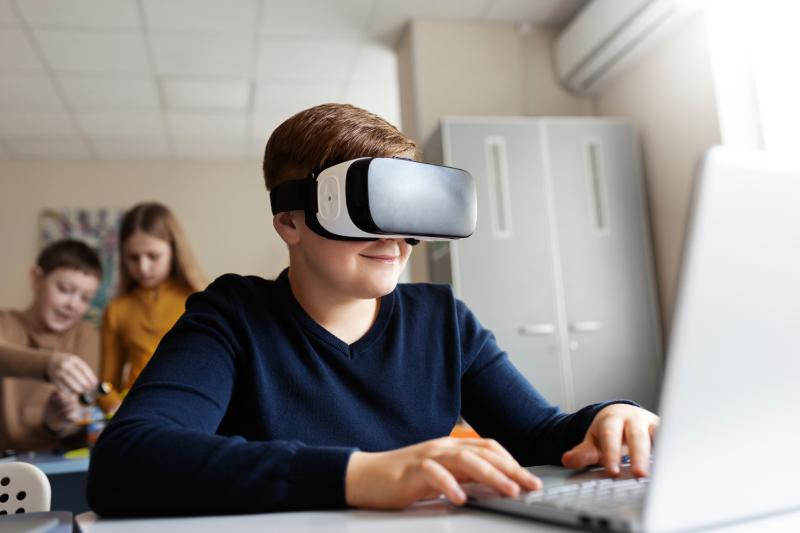
The Future of Augmented Reality in Textbooks: transforming Education Through Immersive Learning
The educational landscape is evolving at an unprecedented pace,powered by cutting-edge technologies that aim to bridge the gap between conventional learning and future-ready skills. Among these innovations,augmented reality in textbooks stands out as a game-changer,promising to transform passive reading into a dynamic,interactive,and immersive learning experience. In this extensive article, we will delve deep into the future of augmented reality in education, its benefits, real-world applications, case studies, and practical tips for educators and institutions eager to embrace this revolution.
Table of Contents
- Introduction to Augmented Reality in textbooks
- Key Benefits of AR-Enhanced Textbooks
- Real-World Applications and Case Studies
- Best Practices & Practical Tips for Implementing AR in Education
- Challenges and considerations
- The Future of Augmented Reality in Education
- conclusion
Introduction to augmented reality in Textbooks
Augmented reality (AR) is redefining how students interact with their study materials. Rather of merely reading text or viewing static images, AR adds interactive digital layers—3D models, animations, videos, and quizzes—over the pages of physical or digital textbooks.By simply scanning a page with a smartphone, tablet, or AR glasses, learners can unlock a treasure trove of multimedia content tailored to their curriculum. This immersive approach boosts engagement, enhances retention, and brings complex concepts vividly to life.
According to a PwC report, AR in education is projected to grow exponentially in the coming years, as institutions recognize its potential to make learning not just more engaging, but also more effective.
Key Benefits of AR-Enhanced Textbooks
Implementing augmented reality in textbooks is not just a futuristic novelty—it’s a practical solution to many learning challenges. Here’s why educational leaders, teachers, and students are embracing AR-based learning:
1. Improved Engagement and Motivation
- Interactive lessons increase student curiosity and active participation.
- Gamified elements, like quizzes and challenges, foster competition and learning rewards.
2. Enhanced Understanding of Complex Topics
- 3D simulations clarify abstract concepts (e.g., anatomy, chemical reactions, past events).
- Visual and tactile learners benefit from manipulable models and interactive maps.
3. Personalized and Adaptive Learning
- AR platforms can adapt content to varying skill levels and learning speeds.
- Real-time feedback helps students identify strengths and advancement areas.
4. Accessibility and Equity
- AR content frequently enough includes audio, subtitles, and translations for diverse learners.
- Remote and underserved students can access rich learning resources with minimal equipment.
5. Collaboration and Social Learning
- Group AR activities encourage teamwork, brainstorming, and mutual problem-solving.
- Students engage in virtual field trips and collaborative real-world projects.
Real-World Applications and Case Studies
Accomplished Implementation in classrooms
Several schools, colleges, and universities worldwide have adopted AR-powered textbooks with remarkable results.Here are a few standout examples:
- Pearson’s AR Biology Books – Pearson integrated AR elements into biology textbooks, letting students dissect virtual frogs and explore the human circulatory system in 3D, directly from textbook pages.
- McGraw-Hill’s SmartBook 2.0 – By embedding AR in physical books, students visualize mathematical theorems and geometry through interactive graphics.
- Google Expeditions – Classrooms worldwide take AR-augmented field trips to Mars, ancient Rome, or under the sea, all from their desks.
First-Hand Student Experiences
“I used to struggle with understanding DNA replication, but with AR, I could watch the whole process unfold right on my textbook. It felt like I was inside the cell! Now, science is my favorite subject.”
— maya, High School Student
Impact on Educators
Teachers report that the integration of augmented reality in textbooks has reduced prep time and increased student test performance. The ability to instantly access up-to-date multimedia content keeps lessons fresh and relevant.
Best Practices & Practical Tips for Implementing AR in Education
To extract maximum benefits from AR-enabled textbooks, educational institutions should follow these proven strategies:
- Start Small: Pilot AR experiments with a single chapter or subject and analyze feedback before scaling.
- Invest in Training: Provide workshops so educators can seamlessly integrate AR into their teaching styles.
- Prioritize Accessibility: Choose AR platforms that support different devices and offer accommodations for students with disabilities.
- encourage Collaboration: Design group projects and peer-driven activities that utilize AR’s social learning strengths.
- Update Content Regularly: Leverage AR’s dynamic capabilities to include the latest research, discoveries, or curriculum changes.
- Gather and Analyze Data: Use student engagement and performance analytics to tailor future AR content more effectively.
Challenges and Considerations
Despite its promise, integrating augmented reality in textbooks comes with hurdles:
- Device Compatibility: Not all students own the latest smartphones or tablets—schools may need to supply equipment.
- Infrastructure: Reliable internet and device maintenance are essential to ensure smooth AR experiences.
- Content Quality: Effective AR isn’t about gimmicks; it’s about pedagogically sound, curriculum-aligned content.
- Teacher Adaptation: Some educators may initially resist new technologies; comprehensive training is key.
- Privacy: Apps should comply with regulations like FERPA and GDPR to protect student data.
By proactively addressing these concerns, institutions can pave the way for seamless adoption and continuous improvement.
The Future of Augmented Reality in education
As AR technology matures and becomes more affordable, its integration in education—especially through AR-powered textbooks—is set to become the norm. Here’s what the future holds:
- AI-Driven Personalization: Artificial intelligence will fine-tune AR content to each student’s learning history and preferences.
- Wearable Devices: Lightweight AR glasses will make immersive learning hands-free and even more intuitive.
- Global Collaboration: Students from different continents will collaborate on AR-enabled experiments and projects in real time.
- Curriculum Integration: Mainstream publishers and EdTech startups will partner to produce fully integrated AR textbooks for every grade and subject.
Potential for Lifelong Learning
Beyond traditional classrooms, AR content will extend to workforce training, adult education, and self-paced learning, ensuring that immersive, interactive knowledge is accessible at every stage of life.
Conclusion
The future of augmented reality in textbooks is incredibly luminous. By blending traditional educational values with state-of-the-art technology, AR is transforming textbooks from static facts sources into vibrant, living portals to discovery. As educators, institutions, and students harness the power of immersive learning, thay unlock new avenues for curiosity, understanding, and success.embracing augmented reality today means preparing learners not just for tomorrow’s challenges—but for a lifetime of innovation and exploration.
Ready to revolutionize your classroom? The next chapter in education starts with augmented reality in textbooks—where every page brings learning to life.