
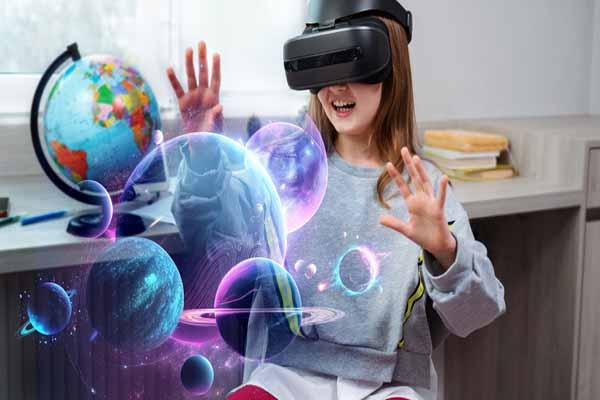
The Future of Augmented Reality in Textbooks: Transforming Education with Interactive Learning
Imagine flipping through your science textbook, pointing your tablet at a diagram, and watching a heart literally beat in front of your eyes—arteries pulsing, valves opening and closing. This is the amazing promise of augmented reality in textbooks: a new era defined by interactive learning experiences that transcend the limits of traditional education. As schools increasingly embrace technology, the future of AR (Augmented Reality) in textbooks stands set too revolutionize how students absorb, understand, and retain knowledge. This article explores the coming transformation of educational experiences powered by AR, how it adds real value to teaching and learning, key benefits, best practices for implementation, and what we can expect in the not-so-distant future.
What is Augmented Reality in Education?
Augmented reality (AR) blends digital content—think 3D models, animations, or interactive quizzes—with the real world, often viewed through smartphones, tablets, or AR-enabled glasses. In the context of education, AR overlays crucial learning components onto standard textbooks, making abstract concepts tangible and fostering greater student engagement. These cutting-edge AR textbooks empower students to interact with content in ways that were unimaginable just a decade ago.
- Visualizing complex concepts through animations and 3D representations
- Accessing interactive quizzes and assessments directly from the textbook page
- Bringing historical events, scientific phenomena, or landmarks to life in real-time
- Personalized feedback and adaptive learning experiences
benefits of Augmented reality in Textbooks
The advantages of integrating AR in textbooks extend well beyond the initial “wow” factor. Here’s how interactive learning via AR is set to impact education at all levels:
1.Enhanced Engagement and Motivation
AR-rich textbooks transform passive reading into captivating, hands-on exploration. Interactive visuals, clickable hotspots, and gamified experiences keep students actively involved, boosting motivation and comprehension.
2.Improved Knowledge Retention
Studies show that students learn better when they can visualize and manipulate what they’re studying. AR helps students grasp intricate topics—like molecular structures or historical events—with immersive, multi-sensory experiences, improving knowledge retention and recall.
3. Adaptive and Personalized Learning
Augmented reality in education paves the way for differentiated instruction. Many AR textbooks offer adaptive assessments and instant feedback, tailoring content delivery to each learner’s pace and style.
4. Promoting Collaboration and Creativity
With AR, group activities come alive. Students can collaborate on virtual lab experiments or take part in shared AR explorations, fostering teamwork and creative problem-solving.
5. Accessibility and Inclusion
By enabling multi-sensory learning, augmented reality can make content more accessible to diverse learners, including those with disabilities. Interactive audio descriptions, language translation, and visual cues help ensure equitable learning experiences.
Practical Tips for Integrating AR in Textbooks
- Start with Simple Integration: Begin with selected AR modules—such as interactive models or video explanations—without fully replacing existing textbooks.
- Train Educators: Professional development and teacher training ensure educators leverage AR’s full potential for lesson planning and classroom management.
- Choose the right Tools: Platforms like Mauritius or Zappar let publishers embed AR objects into printed materials with ease. Check for device compatibility and user-friendliness.
- Ensure Accessibility: Prioritize AR apps and textbooks that comply with accessibility standards, supporting readers with visual or cognitive impairments.
- Gather Feedback: Continuously collect and act on feedback from both students and teachers to refine AR implementations for the best learning outcomes.
Case Studies: AR in Action in the Classroom
case Study 1: Anatomy Lessons with AR
At a leading high school in Texas, biology teachers introduced AR-enhanced textbooks that allow students to view, rotate, and dissect virtual 3D organs.Test scores on human anatomy improved by 32%, and students reported higher engagement and enthusiasm for the subject.
Case Study 2: Interactive maps in History Education
A European publisher integrated AR maps into their history textbooks, were students could point their smartphones at a page and witness battles, animated timelines, and famous landmarks appear on their screens. Classroom participation increased, and students developed a more nuanced understanding of historical context.
Case Study 3: Language Learning with AR
In Japan, language learners use AR textbooks to interact with speech bubbles and video conversations, enabling them to listen, repeat, and engage in virtual role-playing exercises. Educators noticed a marked advancement in student fluency and confidence during speaking assessments.
The Future of AR Textbooks: Trends and Predictions
As technology costs drop and devices become more accessible,the adoption of AR in educational publishing is set to skyrocket. Here’s what the near future holds for augmented reality in textbooks:
- Integration with AI: Artificial intelligence will customize AR learning paths and recommend additional resources based on each student’s progress and interests.
- Cross-Platform Compatibility: AR textbooks will work seamlessly across smartphones,tablets,AR glasses,and even web browsers.
- Greater Interactivity: Features such as gesture and voice controls, real-time simulations, and students creating their own AR content will become standard.
- Data-Driven Insights: Analytics integrated into AR platforms will give educators a clearer view of learning patterns and outcomes, facilitating targeted interventions.
- Global Scalability: With open educational resources and cloud-based platforms, even schools in remote or under-resourced areas can access state-of-the-art AR learning materials.
Frist-Hand Experiences: Educators & Students Speak
“Our physics class used to struggle with concepts like magnetic fields—now, with AR textbooks, students can literally see the fields in action, and experiment for themselves. It’s like having a virtual science lab on every desk!”
– Mrs. Linda Graham,High School Science Teacher
”I remember more when I can play with what I’m learning! The planets spinning out of my textbook made the solar system way easier to understand.”
– alex, Grade 7 Student
Conclusion: Embracing AR for the Next Generation of Learning
The future of augmented reality in textbooks shines brightly, heralding a wave of transformation in how we educate, inspire, and empower learners. By fusing traditional curricula with interactive learning and immersive technology, AR textbooks unlock deeper understanding, greater accessibility, and unprecedented engagement. As publishers,educators,and technology developers continue to collaborate,students worldwide will gain access to a more dynamic,inclusive,and future-ready education.
If you’re an educator, parent, or school administrator, now is the perfect time to explore the benefits of AR-enabled textbooks. Start small, stay curious, and get ready to watch your learners excel as classroom education enters the age of interactive learning.