
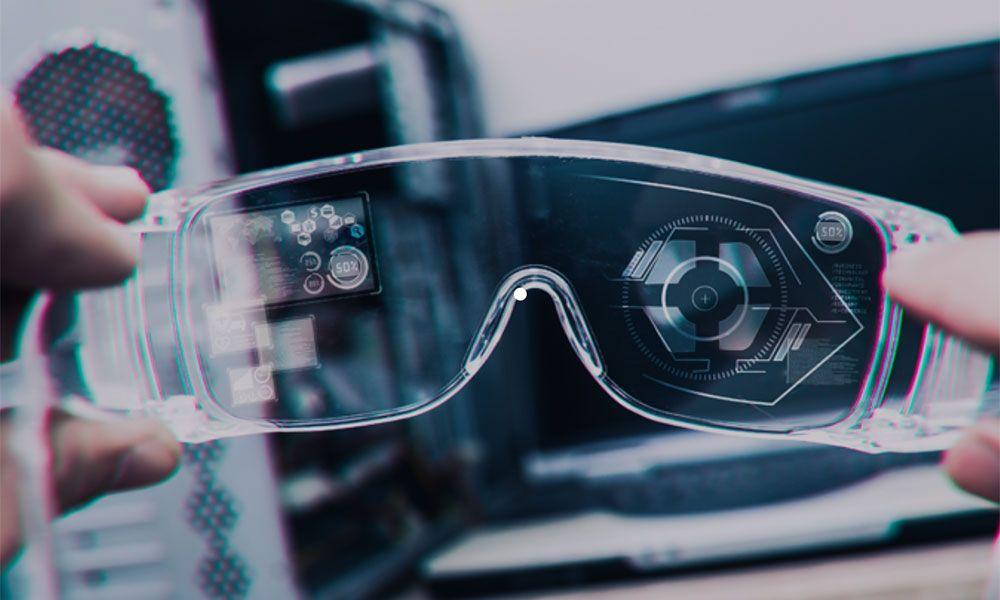
The Future of Augmented Reality in Textbooks: Transforming How Students Learn
The integration of augmented reality in textbooks is rapidly reshaping the landscape of education. as technology advances, customary textbooks are evolving beyond static images and text. Augmented reality (AR) now bridges the gap between traditional learning and digital interactivity,empowering students with immersive educational experiences. This article explores the future of AR in textbooks, highlighting its transformative effects, key benefits, real-world applications, and practical tips for educators and students.
What is Augmented reality in Textbooks?
Augmented reality (AR) overlays digital information—such as images, videos, or interactive animations—onto physical objects or environments viewed through a smartphone, tablet, or AR glasses. When applied to textbooks, AR brings static content to life. Students can scan images or QR codes in their textbooks to unlock 3D models, interactive simulations, or narrated video content, leading to a more engaging and effective learning process.
Why augmented Reality is a Game Changer for Learning
The future of education lies in the ability to make learning more interactive and personalized.Augmented reality in education delivers on both fronts. Here’s how AR is transforming textbooks and the way students learn:
- Visualization of Complex Concepts: Students can see 3D models of molecules, ancient events, or anatomical structures, making abstract ideas concrete.
- Interactive and Personalized Experience: AR adapts to each learner’s pace and style, providing instant feedback and tailored content.
- Engagement and Motivation: The use of technology captivates digital-native students, encouraging deeper exploration of subjects.
- Bridging the Gap Between Theory and Practice: simulating real-life scenarios or scientific experiments allows students to apply their knowledge in a risk-free environment.
- Accessibility and Inclusivity: Multimodal AR content (audio, visual, kinesthetic) supports diverse learning needs, making education more inclusive.
Key Benefits of Augmented Reality in Textbooks
As AR becomes more prevalent in classrooms, its benefits are increasingly evident:
- Enhanced Memory Retention: Interactive experiences have been shown to improve knowledge retention and recall compared to traditional learning methods.
- Immediate Application: Students can apply what they learn in real time through interactive exercises, leading to a deeper understanding.
- Inclusivity for Students with Different Learning Styles: Visual,auditory,and kinesthetic learners all benefit from AR’s multimodal content delivery.
- Cost-Effectiveness: Digital content updates are easier and cheaper to implement than printing new textbooks for every curriculum change.
- Global and Social Learning Opportunities: AR can connect classrooms worldwide,fostering collaboration and cultural exchange through shared interactive projects.
Real-World case Studies: AR Transforming Textbooks
Case Study 1: Pearson’s Augmented Reality Science Textbooks
Pearson, a global educational publisher, has embedded AR features into its science textbooks. By pointing a mobile device camera at specific pages, students instantly access 3D visualizations of cells, chemical reactions, and physics experiments. surveys indicate that students using AR-enhanced editions show higher engagement and test scores.
Case Study 2: McGraw-Hill Education and Anatomy Learning
In partnership with AR software developers,McGraw-Hill Education introduced AR anatomy textbooks,allowing students to explore human organs in three dimensions and interact with systems layer by layer. Educators found that students using these textbooks demonstrated improved spatial understanding and memory retention in anatomy studies.
Case Study 3: Augmented Reality Math Curriculum in Finland
Select Finnish schools have piloted AR-integrated math textbooks. Students manipulate geometric shapes and solve virtual problems that respond in real time to their input. Teachers noted increased enthusiasm among students, especially those previously disengaged with math.
Practical Tips for Integrating Augmented Reality in the Classroom
Ready to bring augmented reality textbooks to your classroom? Here are some actionable steps for educators:
- Evaluate AR-Ready Textbook Publishers: Research publishers and educational platforms (like Pearson, McGraw-Hill, and Revelation Education) that offer AR-enhanced textbooks for your curriculum.
- Leverage Free AR Apps: Explore AR apps such as Quiver, Blippar, and HP Reveal to supplement your current textbooks with interactive AR experiences.
- Invest in Compatible Devices: Ensure students have access to smartphones, tablets, or affordable AR headsets to maximize the technology’s benefits.
- Provide Training for Teachers: Organize workshops or online courses to equip educators with the knowledge to effectively use AR in their teaching practice.
- Start Small—Pilot and Scale: Begin with pilot projects in specific subjects before rolling out AR textbooks across curricula.
Addressing Challenges of AR in Education
while the future of augmented reality in textbooks is promising, several challenges must be considered:
- Accessibility: Not all students may have access to required devices. Schools and districts should plan for equitable device distribution or explore AR experiences compatible with lower-cost hardware.
- Teacher Training: Educators need adequate support and training to effectively integrate AR technology into lessons.
- Digital Fatigue: Balancing traditional and digital teaching methods prevents cognitive overload and screen fatigue.
- Privacy and Security Concerns: Using apps and devices in the classroom requires secure networks and adherence to student privacy regulations.
First-Hand Experiences: Voices from the Classroom
“The first time my students saw the solar system spin right above their textbooks, their excitement was contagious! Suddenly, astronomy was no longer distant; it was at their fingertips.”
— Sarah J., Middle School Science Teacher
”Augmented reality has made complex concepts like chemical bonding so much easier for my students to grasp. They interact with molecules, move them around, and see reactions happen in real time.”
— David L., High School Chemistry Teacher
The Future Outlook of Augmented Reality in Textbooks
The integration of augmented reality in textbooks is set to expand dramatically.As artificial intelligence (AI) and AR merge, future textbooks may leverage adaptive learning systems that personalize content for each student. Early research suggests that AR can significantly improve academic achievement, particularly in areas such as STEM, language acquisition, and vocational training.
Moreover, as devices become more affordable and AR content creation more accessible, schools worldwide—regardless of budget—will be able to leverage this powerful educational tool. Collaborative learning environments where students interact with peers across the globe using shared AR activities are also on the horizon.
Conclusion
The future of augmented reality in textbooks promises a paradigm shift in education. By transforming static pages into interactive and personalized experiences, AR is revolutionizing how students learn. From boosting engagement and memory retention to making complex subjects accessible, the benefits of AR in education are profound.
As more educators and institutions embrace AR-driven learning, textbooks will become portals to immersive worlds where knowledge comes alive. Now is the time for teachers,students,and policymakers to led the charge,ensuring that the next generation of learners is equipped with the tools and skills needed for the digital age.