
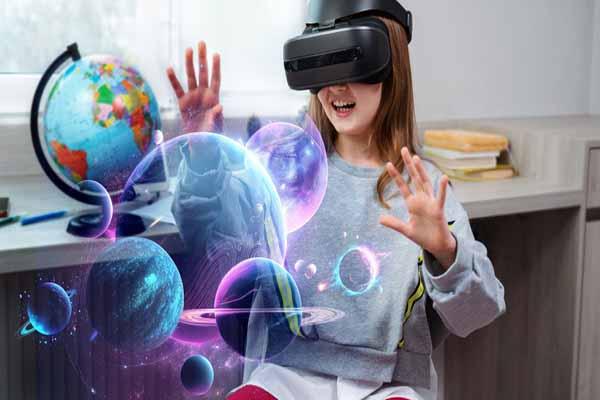
The Future of Augmented Reality in Textbooks: Transforming Learning in the Digital Age
In the rapidly evolving world of education, one of the most remarkable innovations is Augmented Reality in textbooks. By seamlessly blending digital elements with printed content, AR is redefining the learning experience for students of all ages. As the digital age progresses, integrating augmented reality (AR) into textbooks stands out as a transformative step toward interactive, immersive, and highly engaging learning environments.
Introduction: Embracing the Digital Classroom
Customary textbooks have been the cornerstone of student learning for centuries. However, with advancing technology and the shift towards digital education, we are witnessing a notable conversion in how information is delivered and absorbed. augmented Reality textbooks combine the reliability of traditional print with the interactivity and engagement of digital learning tools, offering a glimpse into the future of education.
What is Augmented Reality in Textbooks?
Augmented Reality (AR) overlays digital content—such as 3D models, videos, animations, and interactive quizzes—onto physical textbook pages when viewed through a smartphone, tablet, or AR-enabled device. Unlike Virtual Reality (VR), which immerses users in a fully digital habitat, AR complements the real world, enriching the physical textbook with a digital dimension.
How Does AR Work in Textbooks?
- Students or teachers scan printed images or QR codes in the textbook using an AR app.
- The app recognizes the code and projects interactive digital information on top of the page.
- Students can manipulate 3D objects, watch animations, listen to audio narration, or participate in interactive activities.
Benefits of Augmented Reality in Education
Adopting augmented reality in education offers a range of benefits for both students and teachers. here are some of the most impactful advantages:
- Enhanced Engagement: AR turns passive reading into an immersive experience, increasing student motivation and interest.
- Deeper Understanding: Complex concepts, such as human anatomy or molecular chemistry, become visual and interactive, making them easier to grasp.
- Personalized Learning: Adaptive AR features can adjust the content difficulty based on a student’s progress or learning pace.
- Improved Retention: Interactive and visual experiences boost long-term memory and recall compared to traditional text-based learning.
- Accessibility: AR can provide audio descriptions,sign language,and interactive quizzes to cater to diverse learning needs.
- Cost-Effective Updates: Instead of printing new editions, publishers can update AR content digitally, reducing overall expenses and environmental impact.
Transforming Subjects Across the Curriculum
One of the most exciting aspects of the future of AR textbooks is thier versatility across different subjects. Here’s how AR is making a difference:
Science and Mathematics
- Interactive 3D models of cells, organs, or atoms allow students to explore complex structures from every angle.
- Mathematical problems and geometric figures come alive, enabling hands-on manipulation and experimentation.
History and Geography
- Past events can be reenacted on the page, turning static timelines into dynamic stories.
- Geographical maps display changing landscapes, weather patterns, and 3D topographical views.
Languages and Literature
- Language learning is enriched with voice recognition, pronunciation help, and interactive conversation practice.
- Literary worlds are visualized through character maps and animated scenes, fostering deeper understanding and empathy.
Case Studies: Augmented Reality in Action
pearson’s AR-enabled textbooks have been piloted in schools across the US and UK. These materials allow students to scan textbook pages and visualize 3D anatomical structures or chemical reactions. Teachers have reported increased student engagement and improved academic performance, particularly in STEM subjects.
Wonderscope is an AR reading app that transforms stories into immersive experiences children can interact with. Teachers note that students are more eager to read, and literacy rates have improved in classes using Wonderscope-enabled textbooks.
First-Hand Experiences: What Students and educators Say
“I never thought learning about the solar system could be this exciting! With AR, I can see planets orbiting in real-time and even take virtual trips to Mars.”
— Emily, Grade 5 Student
“AR textbooks have transformed my science classes. Students who struggled with abstract ideas now understand them much faster through interactive models.”
— Mr. Ahmed, High School Science Teacher
Overcoming Challenges and Practical Tips for AR Adoption
While the benefits are compelling, integrating augmented reality in textbooks comes with challenges. Here’s how educators and institutions can address them:
Common Challenges
- Device availability: Not all students have access to smartphones or tablets.Schools should consider device lending programs.
- Teacher Training: Professional advancement is essential to ensure teachers are cozy and proficient with AR technology.
- Content Quality: Publishers must collaborate with educators to produce accurate, curriculum-aligned AR content.
- Technical Issues: Reliable internet and updated software are necessary for optimal AR performance.
Practical Tips for Successful Implementation
- Start with pilot programs to introduce AR slowly and evaluate its effectiveness.
- Set clear learning objectives and choose AR content that aligns closely with your curriculum.
- Encourage student feedback to refine and select the most impactful AR experiences.
- Utilize open-source AR tools and collaborate with other educators to share resources and best practices.
the Future of AR in Education: What Lies Ahead?
The integration of AR in educational materials is still in its early stages, but the future looks extraordinarily promising. Experts predict:
- Widespread Adoption: As devices become more affordable and AR platforms more user-friendly, more schools and universities will adopt AR textbooks.
- AI-Powered Personalized Learning: Artificial intelligence will further enhance AR experiences by tailoring content in real-time to meet individual student needs.
- Collaborative Learning Environments: Multi-user AR experiences will foster teamwork and joint problem-solving, preparing students for the collaborative nature of the modern workplace.
- Integration with VR and Mixed Reality: The convergence of AR, VR, and MR will create a spectrum of immersive educational experiences never before possible in traditional classrooms.
Conclusion: Ready for the Next Chapter in Learning?
Augmented reality in textbooks is poised to transform learning, making it more interactive, engaging, and effective for students in the digital age. By bridging the gap between the physical and digital worlds, AR is not only enhancing academic achievement but also preparing learners for the technology-driven future. As more educators, institutions, and publishers embrace AR, the classroom of tommorow will look remarkably different from today—dynamic, personalized, and truly interactive. Are you ready to turn the page to the future of learning?
Keywords: Augmented reality in textbooks, AR in education, future of augmented reality, interactive textbooks, digital age learning, educational technology, AR case studies, benefits of AR in education.