
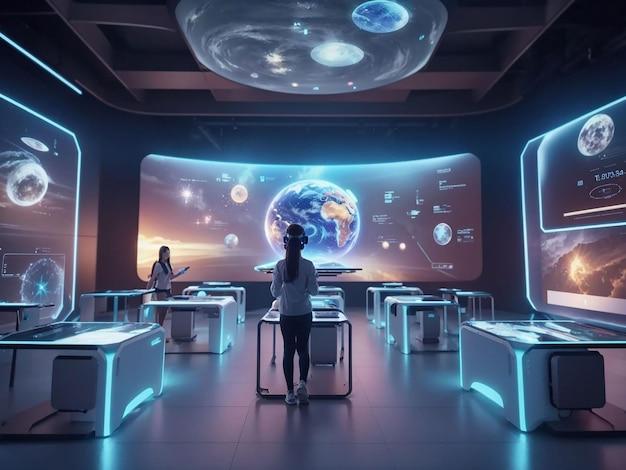
The Future of Augmented Reality in textbooks: Transforming Learning with Interactive Technology
Introduction: Augmented Reality Textbooks are Shaping Tomorrow’s Classrooms
Picture this: a student hovers their tablet over a picture in a biology textbook, and suddenly, a 3D beating heart appears above the page, pulsing with lifelike accuracy. This isn’t science fiction—it’s the new world of Augmented Reality in textbooks. As educational technology evolves, AR textbooks are redefining the traditional learning experience, merging printed content with digital interactivity to inspire curiosity and improve engagement.
In this comprehensive guide, we’ll explore how interactive technology and AR are revolutionizing educational materials, discuss real-life applications and case studies, and offer practical insights on how you can prepare for the next generation of learning.
What is Augmented Reality in Textbooks?
augmented Reality (AR) superimposes digital content—such as images, 3D models, animations, and audio—onto the real world as seen through a device like a smartphone or tablet. In the context of textbooks, AR bridges the gap between passive reading and active learning by transforming static images and words into immersive, multi-sensory experiences.
For instance, a history student may witness a virtual reenactment of a famous battle by pointing their phone at a diagram in their textbook, while a chemistry class might observe molecular structures come to life in three dimensions.
Benefits of Augmented Reality in Textbooks
The integration of augmented reality in textbooks goes far beyond novelty—it offers real educational value. Here are some compelling benefits:
- Enhanced Engagement and Motivation: AR brings concepts to life, making learning interactive and memorable. Students actively participate, which boosts motivation and retention.
- Deeper Understanding: Complex ideas, such as anatomical systems or planetary motion, are visualized in 3D, helping students grasp challenging subjects more intuitively.
- Personalized learning: Interactive features allow students to learn at their own pace, revisiting challenging topics as needed until mastery is achieved.
- Accessibility & Inclusion: AR content can be adapted for different learning styles and needs, making educational material accessible to a wider range of students.
- Real-Time Feedback: Interactive quizzes and instant feedback reinforce learning and support formative assessment.
- Collaboration & Creativity: Shared AR activities foster discussion, collaboration, and creative problem-solving in the classroom.
How AR Textbooks are Transforming the Learning Experience
Bridging the Physical-Digital Divide
AR textbooks seamlessly connect traditional print materials with dynamic virtual content. This blended learning approach supports both visual and kinesthetic learners and encourages active engagement, turning students from passive readers into participants in knowledge discovery.
Practical Examples in the Classroom
- Science education: Students visualize cellular processes, chemical reactions, or human anatomy in augmented 3D models, manipulating objects to see cause-and-effect relationships.
- History and Social Studies: Interactive historical maps, virtual time-travel experiences, and immersive storytelling help bring the past to life.
- Mathematics: dynamic AR visualizations simplify abstract concepts, such as graphs, functions, or geometric shapes.
- Language Learning: Vocabulary expansion with interactive overlays and scene-based,contextual dialogues support immersive language acquisition.
Case Studies: Real-World Impact of AR in Education
Pearson’s AR Textbook Initiatives
Educational publishing giant Pearson has developed AR-enabled textbooks where students can scan images to access virtual labs, animated processes, and knowledge checks. early studies indicate a measurable increase in knowledge retention and classroom enthusiasm compared to traditional methods.
Anatomy Learning with Augmented Reality
Several medical schools have adopted AR textbooks and apps, allowing students to examine lifelike 3D anatomical structures, reducing reliance on physical specimens and improving spatial understanding. Feedback from both instructors and learners has been overwhelmingly positive.
First-Hand experience: Voices from the Classroom
“Our students light up when they see historical figures ‘walk out’ of the pages. It’s not just more fun; the AR activities spark deeper questions and discussions.”
– Mrs. Lorraine Chen, Secondary School History Teacher
The Future of Augmented Reality in Textbooks: Trends & Predictions
- Increased Adoption: As the cost of AR progress decreases and mobile device proliferation grows, more schools worldwide will adopt AR-powered textbooks across all subjects.
- AI & Personalization: Artificial intelligence will tailor AR experiences to individual learning profiles, offering adaptive feedback and custom challenges.
- Cloud-Based Content: Streaming AR content reduces the need for large in-app downloads,leading to seamless updates and expanded multimedia resources.
- Integration with Virtual labs: future textbooks might connect students to global collaborative experiments and simulations in real time.
- Cross-Platform Accessibility: AR content will become increasingly compatible with a range of devices, from smartphones to AR headsets, making immersive learning ubiquitous.
Practical Tips for Educators and Institutions
- evaluate Needs: identify curricular areas that would benefit most from AR enhancement—complex concepts, visual subjects, or areas where student engagement is currently lacking.
- Pilot AR Content: Start with small-scale pilots using free or low-cost AR apps linked to textbooks. Gather feedback from both students and teachers.
- Professional Development: Invest in training for instructors to maximize the potential of AR-enhanced textbooks and troubleshoot common issues.
- Infrastructure Readiness: Ensure classroom devices and networks support AR applications smoothly for all students.
- Foster Collaboration: Encourage group activities and projects that make creative use of AR features, building teamwork alongside digital literacy.
Addressing Common Concerns about Augmented Reality in Education
Is Augmented Reality too distracting? When implemented thoughtfully, AR focuses attention and breaks complex content into manageable, engaging pieces—if guided by clear learning objectives.
What about accessibility? many AR platforms now offer text-to-speech, captions, and intuitive interfaces for enhanced access, and continual improvements ensure wider inclusivity.
Cost considerations? While there are upfront costs for AR development or adoption, publishers increasingly offer bundled or open-source AR content for educational institutions, making AR more accessible every year.
Conclusion: Embracing the Interactive Textbook Revolution
The future of Augmented Reality in textbooks holds immense promise for transforming how students interact with knowledge. By melding the best of print and digital worlds, AR empowers learners to explore, question, and understand in ways never before possible. As technology advances, we’re quickly moving from passive reading to immersive, interactive learning—turning each textbook into a gateway to discovery.
For educators,institutions,and parents,the journey is just beginning. By embracing interactive technology and advocating for thoughtful AR integration, we can unleash the full potential of educational innovation—and inspire the next generation to become not just students, but passionate explorers of their world.