
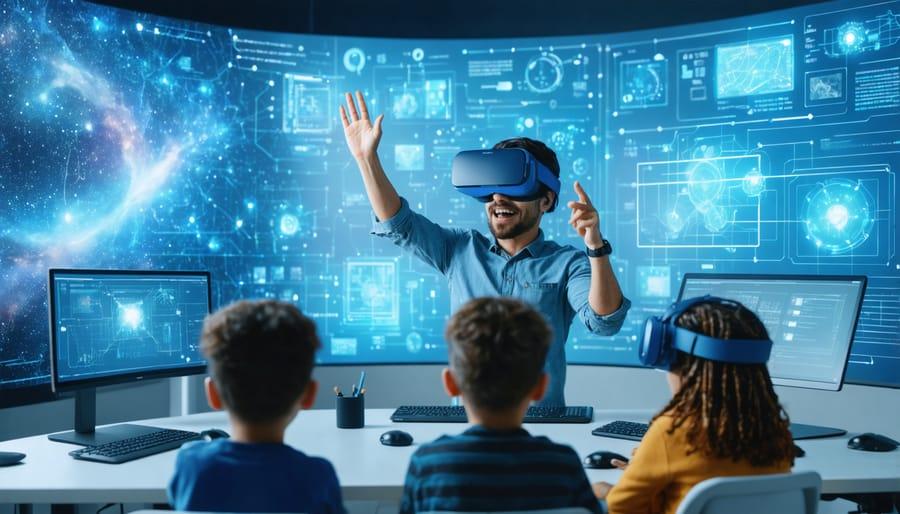
Top 7 Cost-Effective VR Solutions for Schools: affordable Classroom Technology in 2024
Virtual reality (VR) is rapidly transforming the educational landscape,making lessons more immersive,engaging,and interactive for students of all ages. As VR continues to advance, its accessibility and affordability have improved dramatically, allowing even budget-conscious schools to integrate innovative technology into thier curricula. In this complete guide, we explore the top 7 cost-effective VR solutions for schools in 2024, offering practical insights into their benefits, use cases, and tips for seamless implementation.
Why Invest in Affordable VR Solutions for Schools?
Bringing virtual reality into classrooms isn’t just a forward-thinking trend—it’s an effective way to enhance educational outcomes. By introducing cost-effective VR solutions, schools can:
- Boost Engagement: VR makes lessons captivating and memorable, increasing student motivation.
- Enhance Understanding: Complex topics become easier to visualize and grasp through immersive experiences.
- Encourage inclusivity: VR can cater to various learning styles and support students with different needs.
- Facilitate Safe Experiments: Explore dangerous or impossible scenarios safely — like virtual chemistry labs or distant ancient sites.
- Promote Future-ready Skills: Familiarity with advanced technology prepares students for tomorrow’s workforce.
Top 7 Cost-Effective VR Solutions for Schools in 2024
Below are our expert picks for affordable and high-impact VR platforms and hardware suited for classrooms. Each solution balances accessibility, educational content, and ease of integration.
1. Meta Quest 2 & 3 (Formerly Oculus Quest)
- Price: Starting from $299 (Quest 2); $499+ for quest 3.
- Device Type: Standalone VR headset (no PC required for most apps).
- Best For: Middle and high schools, interactive STEM, history, and art lessons.
The Meta Quest series reigns as a top choice for schools seeking affordable classroom VR headsets. With its wireless, all-in-one design and a vast library of educational apps—including Expeditions Pro, ENGAGE, and more—it’s perfect for group and individual learning. The Quest devices are robust, user-friendly, and widely supported.
2. Google Expeditions Pro (Cardboard-Compatible)
- Price: $10–$50 per viewer; use with existing smartphones.
- Device Type: cardboard VR viewers + mobile devices.
- Best For: Elementary through high school, field trips, geography, and science lessons.
Google Expeditions Pro revitalizes the onc-popular expeditions app, now supported by the education community.Cardboard VR solutions are among the most economical paths for schools to introduce VR. Simply insert a smartphone into a low-cost viewer and embark on hundreds of virtual journeys.
3. Crumbl VR Headset Bundles for Education
- Price: Around $50–$100 per unit (discounted bundles for schools).
- Device Type: Entry-level headsets; smartphone-powered.
- Best For: Class-wide sessions, language learning, career exploration.
Crumbl offers bundled classroom VR kits with software, lesson plans, and support. Their rugged build makes them ideal for younger students. Teachers benefit from ready-made VR lesson content and classroom management tools.
4. Pico G3 Education Edition
- Price: $399–$499 per headset.
- Device Type: Standalone VR headset.
- Best For: High school and vocational education, STEAM subjects.
the Pico G3 provides a wireless, PC-free VR experience similar to the Meta Quest but with software customization for schools. The education Edition includes multi-user classroom controls, offline lesson capabilities, and safe browsing features.
5. ClassVR by Avantis
- Price: approx. $400–$500 per headset (bulk education pricing available).
- Device Type: All-in-one VR headset; comes with a teacher portal.
- Best For: Cross-curricular use, easy group management, teacher-driven lessons.
ClassVR is designed exclusively for K-12 education and includes a robust teacher management portal, classroom controls, and an extensive library of curriculum-linked resources. Support and training for teachers are part of the package, making integration smooth and stress-free.
6. Merge Cube & Merge EDU Platform
- Price: Merge Cube: $19.99 each; Merge EDU subscription affordable for schools.
- Device Type: Augmented & VR—use with smartphones or tablets.
- Best For: Elementary to middle school, hands-on science and math investigations.
While technically AR/VR, Merge Cube introduces spatial learning by visualizing 3D objects students can “hold” in their hands. It’s a cost-effective way to explore VR concepts, especially for science classes. Compatible with various devices and easily scalable.
7. Veative VR Education Solutions
- Price: VR headset bundles start around $350; licensing for content available.
- Device Type: Standalone VR headsets or browser-based VR modules.
- Best For: High-impact science, math, STEM simulations.
Veative focuses on rich, interactive VR content aligned with global curricula. Their affordable classroom VR bundles or browser-based VR modules allow flexible integration,whether you have existing devices or require a turn-key solution.
Key Benefits of Using VR in Schools
Adopting cost-effective VR solutions for schools brings measurable advantages. Some of the core benefits include:
- Immersive Storytelling: Engage students more deeply than with customary lectures.
- Increased Retention: Studies show VR can double retention rates versus passive learning.
- Real-World Skills: Practice critical thinking, problem solving, and collaboration in virtual scenarios.
- Flexible Subject Coverage: VR is great for STEM, history, language arts, career exploration, and more.
- Safe Learning Environments: Simulate potentially dangerous labs or historical field trips without risk.
Tips for Implementing Affordable VR in Your Classroom
To maximize the impact of your new technology, consider the following practical tips:
- Start Small: Pilot one or two devices before scaling up to the whole class.
- Engage Students: Ask for feedback to fine-tune which VR experiences work best.
- Leverage Free resources: Many educational VR providers offer free sample lessons and teacher training.
- Prioritize Device Compatibility: Check which headsets work with existing devices to reduce costs.
- Integrate with Curriculum: Connect VR activities with lesson objectives to drive measurable outcomes.
Case Studies: Success Stories from the Classroom
Lincoln Elementary’s Journey with ClassVR
After integrating ClassVR headsets, Lincoln Elementary saw a 40% boost in science test scores within a semester. Teachers reported higher student engagement during Earth Science and Anatomy lessons, as students could “walk through” the solar system or explore the human body in 3D.
STEM Labs at Greenfield High Using Meta Quest 2
Greenfield High’s science department secured a small grant to acquire Meta Quest 2 headsets. in less than a year, students completed advanced chemistry experiments virtually—experiencing real-time reactions and making critical lab decisions in a safe VR habitat. The program also inspired several students to pursue STEM careers.
Frequently Asked Questions
Are VR headsets safe for kids and teens?
Affordable VR headsets for schools are generally safe when used for short periods and supervised by teachers. Modern devices have built-in safety features, but it’s best to follow age recommendations and provide regular breaks.
Can schools use smartphones they already own for VR?
Yes! Many cost-effective classroom VR solutions use low-cost viewers (like Google Cardboard) with school-owned or donated smartphones, significantly reducing the overall expenses.
What about hygiene and sharing devices?
Sanitizing headsets between uses is essential. Many providers offer vinyl face covers, antimicrobial materials, and school-friendly sanitation solutions.
Conclusion: Making VR Accessible and Affordable for Every School
In 2024, integrating cost-effective VR solutions for schools is more achievable than ever—helping students learn with curiosity, creativity, and confidence. Whether you opt for robust all-in-one VR headsets, smartphone-based viewers, or innovative educational platforms, these seven solutions empower educators to bring the world—and even the universe—straight into the classroom.
ready to transform your school’s teaching toolkit? Explore these affordable classroom VR options and inspire the next generation of leaders, scientists, and innovators. For more practical guides on educational technology, keep following our blog!