
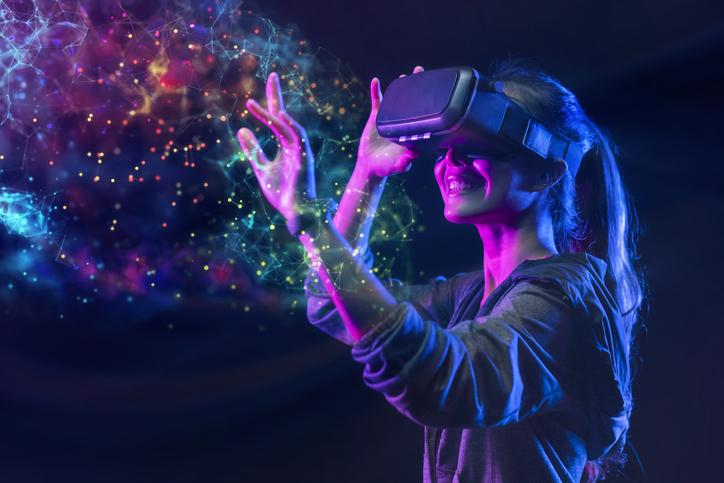
Top 7 Cost-Effective VR Solutions for Schools: Affordable Virtual Reality Technology for Education
Introduction
Virtual reality (VR) is rapidly transforming the educational landscape, making immersive learning experiences more accessible for schools than ever before. Yet, one hurdle remains: cost. Thankfully, a new generation of budget-kind virtual reality solutions is emerging, designed specifically for schools and educational institutions. In this comprehensive guide, you’ll discover the top 7 cost-effective VR solutions for schools, how affordable VR technology can enhance classroom learning, and practical tips to get started—even with a tight budget.
Why Affordable Virtual Reality Technology Matters for Schools
- Increases student engagement and motivation through immersive lessons
- Brings abstract concepts to life in STEM,history,and literature
- Equalizes opportunities for schools with limited resources
- Prepares students for the future with advanced technological skills
- Supports differentiated learning and inclusive classrooms
However,integrating VR shouldn’t break the bank. With the right approach, your school can benefit from high-impact interactive learning environments at a fraction of the cost of traditional VR systems.
Top 7 Cost-Effective VR Solutions for Schools
below are the best affordable VR options designed to empower students and educators while staying within budget.
-
Google Expeditions / Google cardboard
google Expeditions, paired with Google Cardboard viewers, offers one of the simplest and most budget-friendly VR experiences for classrooms. using low-cost cardboard headsets and students’ smartphones or school-provided devices, teachers can guide students through hundreds of virtual field trips—to ancient Rome, the bottom of the ocean, or even outer space.
- Headsets as low as $10 each
- Expansive library of educational experiences
- Easy to set up and use with existing mobile devices
-
ClassVR
ClassVR is a teacher-friendly, standalone VR platform designed for schools. It provides robust, all-in-one headsets, a cloud-based content platform, and classroom management tools. While more expensive than Google Cardboard,it’s significantly cheaper than high-end consumer VR systems and comes with comprehensive educational resources.
- Headsets start around $350 (bulk discounts available)
- Catered library for K-12 subjects
- User-friendly teacher control
-
Merge EDU (Merge Cube + Merge Headset)
Merge EDU leverages the unique Merge Cube, a soft foam cube students hold in their hand, combined with affordable VR viewers. The system allows for both augmented reality (AR) and VR content, providing hands-on engagement for STEM, science, geography, and beyond.
- Merge Headsets under $50; Merge Cubes under $20
- Interactive 3D models and simulations
- Flexible for use with most smartphones or tablets
-
Oculus Quest 2 (Meta Quest 2)
Oculus Quest 2 (now branded as Meta Quest 2) is a popular all-in-one VR headset. Though initially designed for gaming,its affordability,performance,and growing library of educational apps make it a viable classroom option—especially for older students in high school and beyond.
- Headsets start at $299
- Wireless and easy to set up anywhere
- Wide range of affordable or free educational VR apps
-
Veative VR Education Kit
Veative Labs offers VR learning headsets with a strong focus on STEM education. Pre-loaded with interactive modules in science, math, and language arts, Veative provides team discounts and scalable options for classrooms with limited technology infrastructure.
- VR headsets starting at $300 per unit
- Over 550 interactive educational modules
- offline access for schools with unreliable internet
-
zSpace Inspire
zSpace is known for blending VR and AR into a desktop experience,meaning students don’t wear a headset but interact with 3D content using a stylus and lightweight glasses.The zSpace inspire is particularly celebrated in career technical education (CTE), biology, and physics classes.
- Entry packs start at under $1,000 (group use)
- comprehensive software suite for educators
- Supports group collaboration without high-end headsets
-
Pico G2 4K Education Edition
Pico G2 4K offers high-resolution standalone VR headsets built for group learning, with robust device management and hygiene features (crucial for schools). It’s well-suited for schools looking for a mid-range solution—offering enterprise-level hardware at an affordable price.
- Headsets typically priced around $375
- No smartphone or PC required—true standalone device
- Compatible with a range of classroom VR content platforms
Case Studies: VR in real Classrooms
case Study: Virtual Field Trips at Hillcrest Elementary
using Google Cardboard, teachers at Hillcrest Elementary in Texas led students on unforgettable virtual field trips. With less than $200, the school provided 20 headsets and used students’ phones. Teachers reported a 60% boost in student engagement during lessons on world geography and environmental science.
Case Study: STEM Immersion with Merge EDU
At a middle school in Michigan,the science department adopted six Merge Headsets and Cubes,integrating AR/VR experiences into their STEM curriculum. Students explored the human heart, dissected virtual frogs, and constructed geometric shapes. A teacher noted,“Even students who struggled with traditional lessons were captivated by the 3D exploration.”
Practical Tips for Implementing Affordable VR in the Classroom
- Start small: Pilot a few headsets before scaling up schoolwide.
- Leverage existing devices: Use student-owned smartphones or tablets to minimize hardware costs.
- Seek grants and funding: Many education technology grants cover VR hardware and software.
- Engage faculty: offer basic VR/AR training for teachers to maximize usage and impact.
- Prioritize hygiene: Choose headsets with washable face guards or disposable covers.
- Integrate with curriculum: Use pre-made lesson plans and align VR content with learning objectives.
Key Benefits of Cost-Effective VR Solutions for Schools
- Enhanced retention: Students learn better by experiencing, not just memorizing.
- Equitable access: Affordable VR ensures every classroom can benefit, not just elite schools.
- Scalable solutions: Most options can be expanded as budgets grow, making them future-proof.
- Promotes creativity & collaboration: Shared VR experiences encourage group work and innovation.
Conclusion
Virtual reality no longer belongs to the distant future or only to well-funded institutions. Today’s cost-effective VR solutions for schools open the door to immersive, interactive learning for students everywhere. By choosing the right budget-friendly VR system—like Google Cardboard, Merge EDU, or ClassVR—you can transform your classroom, spark student curiosity, and build future-ready skills. Start small,dream big,and unlock the potential of affordable virtual reality technology for education.
Ready to embrace the future? Now is the perfect time for your school to join the VR revolution—without breaking the bank.