
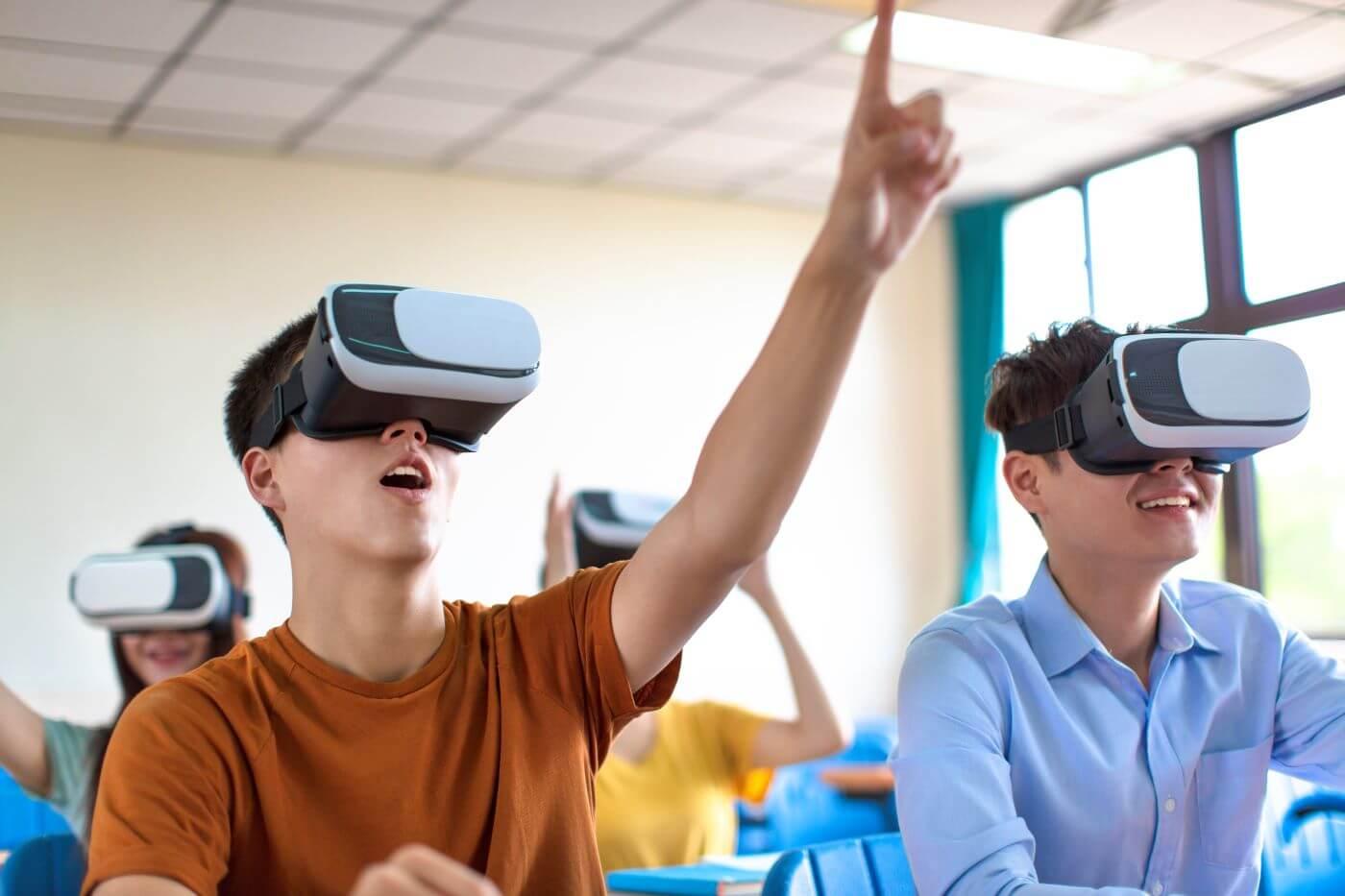
Top Case Studies of Successful VR/AR Implementations in Schools: Real-World Education Transformations
virtual Reality (VR) and Augmented Reality (AR) are no longer just buzzwords—they are innovative tools that are revolutionizing education across the globe. Schools and educators are leveraging VR/AR to deliver immersive,interactive learning experiences that engage students in unprecedented ways. in this article, we’ll explore top real-world case studies of successful VR/AR implementations in schools, examine the transformative impact of these technologies, and provide practical insights for educators considering adoption.
Why VR/AR in Education: The power of Immersive Learning
Before diving into the case studies, let’s briefly cover the key benefits of using VR and AR in schools:
- Enhanced Engagement: Students are captivated by interactive, 3D environments.
- Improved Retention: Immersive learning boosts memory and understanding.
- Access to Impossible Experiences: Students can travel inside the human body, walk on mars, or explore historical events.
- Personalized Learning: Adaptive VR experiences cater to individual student needs.
- Collaboration Opportunities: Many VR/AR platforms promote teamwork and communication among students.
Now, let’s explore how schools worldwide are embracing VR/AR by reviewing successful case studies.
1. The Empowering effect of VR Science Labs: Riverdale Country School, New York
Riverdale Country School incorporated virtual reality science labs into their curriculum using the Labster VR platform. The challenge: their students had limited access to physical lab equipment and faced safety constraints with some experiments.
Conversion Process:
- Deployed Oculus VR headsets and Labster’s library of interactive science simulations.
- Integrated VR modules into biology, chemistry, and physics units.
- Teachers trained in facilitating and assessing VR-based lab work.
Impact:
- Over 92% of students reported deeper understanding of complex scientific concepts.
- Teachers noted increased classroom participation and a 30% advancement in lab report quality.
- Students could safely explore hazardous experiments and visualize molecular structures in 3D.
Key Takeaway:
Well-chosen VR platforms can close the gap between theoretical learning and hands-on experimentation,especially in resource-limited schools.
2. AR for Language Immersion: Colegio SEK, spain
Colegio SEK, a private school in Madrid, launched an aspiring Augmented Reality language learning initiative for its elementary students. Recognizing that language immersion accelerates proficiency, SEK used AR apps to transform classrooms and physical books into interactive learning environments.
Transformation Process:
- Adopted AR apps like ZapWorks and HP Reveal to overlay multimedia content on textbooks and classroom walls.
- Students accessed vocabulary, pronunciation guides, and cultural data via smartphones and tablets.
- Teachers integrated real-world objects with virtual dialogues and games.
Impact:
- Student engagement soared, with reading comprehension and speaking confidence increasing by 35% in the first semester.
- Parental feedback highlighted greater enthusiasm for out-of-school language practice.
Key Takeaway:
AR tools make language learning interactive and contextual, allowing students to practice skills in real-life scenarios.
3. Virtual Field Trips for Social Studies: the Henry county School District, Georgia
The Henry County School District piloted Google Expeditions to address budget constraints on traditional field trips. Teachers sought to make historical events and world cultures vivid for students, regardless of school funding.
Transformation Process:
- classrooms equipped with low-cost VR headsets and Google Expeditions kits.
- Social studies lessons designed around virtual tours to ancient Rome, Egyptian pyramids, and the Great Wall of China.
- Students encouraged to narrate and reflect on their “journeys” through digital storytelling tools.
Impact:
- Student curiosity and empathy increased, especially among historically under-engaged learners.
- Writing assignments improved as students were more invested in the topics they “experienced.”
- The district saved thousands of dollars while delivering rich, memorable educational experiences.
Key Takeaway:
VR field trips open a world of possibility for schools limited by physical or financial constraints, leveling the playing field for all students.
4. Inclusive Education Using VR: The Australian School for the Deaf
In Australia, the Victorian College for the Deaf partnered with local developers to make math and science accessible to students with hearing impairments using custom VR content.
Transformation Process:
- Developed VR lessons with embedded sign language interpretation and captions.
- Created collaborative virtual environments supporting group problem-solving.
- Provided professional development for teachers on inclusive VR instruction.
Impact:
- Students reported a sense of belonging and improved academic confidence.
- Teachers observed increased collaboration among hearing and non-hearing students.
- Test scores in STEM subjects improved by 28% within a year of VR integration.
Key Takeaway:
With thoughtful implementation, VR can foster inclusive classrooms, ensuring all learners access high-quality education.
5. Augmented Reality for STEAM Creativity: Ormiston Primary School,New zealand
Ormiston Primary School transformed its STEAM (Science,Technology,Engineering,Arts,Mathematics) program using AR to bring creativity to life.
Transformation Process:
- Students used AR apps like Quiver and Merge Cube to animate their artwork and create interactive science models.
- Teachers designed project-based lessons where students built,scanned,and tested their own inventions in AR.
- Regular showcase events allowed parents to interact with students’ AR projects via tablets and smartphones.
Impact:
- A dramatic increase in student engagement and creativity.
- Girls’ participation in STEAM projects rose by 40%,attributed to the playful and visual nature of AR activities.
- The school earned community-wide recognition as an EdTech leader.
Key Takeaway:
Augmented Reality can inspire confidence, collaboration, and creative thinking in STEAM learning, appealing to diverse learners.
First-Hand Experiences: voices from the classroom
“VR in our science lab made abstract concepts so much more real for my students—they were excited to experiment and explain what they saw.Every session sparked new questions and creative discussions.”
“With AR, my students loved using their smartphones to uncover hidden facts in our textbooks. Learning vocabulary used to be a struggle, but now everyone looks forward to class.”
Best Practices for Implementing VR/AR in Schools
- Start Small: pilot VR/AR in a single subject or unit before expanding schoolwide.
- Train Educators: Offer professional development to teachers for confident classroom integration.
- Choose Accessible Tech: Consider low-cost options like Google Cardboard or AR-enabled mobile devices.
- Integrate with Curriculum: Ensure that VR/AR supports clear learning objectives—not just novelty value.
- Encourage Reflection: Use class discussions and digital portfolios to help students process and connect their experiences.
- foster Inclusion: Select or design content that accommodates diverse learning needs and accessibility requirements.
Conclusion: VR/AR is Transforming Classrooms today
The real-world case studies above demonstrate that VR and AR technologies are delivering meaningful improvements in education outcomes, from deeper student engagement to higher academic achievement. Schools around the globe are proving that immersive learning is not just a futuristic dream—it’s happening now. Whether you teach science,languages,history,or the arts,there are practical and affordable ways to integrate VR/AR into yoru classroom.
Ready to start your school’s digital transformation? Embrace VR and AR in education to unlock curiosity, creativity, and lifelong learning in every student.
Related Keywords: VR in schools, AR in classrooms, virtual reality education case studies, augmented reality schools, VR learning, best VR implementation in education, AR teaching tools, immersive learning, educational technology transformation.