
Top Cost-Effective VR Solutions for Schools: Affordable tools to Transform Education
Introduction: Affordable Virtual Reality is Transforming Education
Virtual reality (VR) is no longer just a futuristic concept—it’s quickly becoming a transformative tool in classrooms worldwide. By bringing immersive experiences to students, VR in education empowers teachers to enrich lessons with virtual field trips, interactive science labs, and hands-on learning without the costs traditionally associated with such opportunities. However,budget constraints ofen prevent schools from adopting VR technologies.If you’re searching for cost-effective VR solutions for schools, this article will guide you through the top affordable options that help schools engage students, enhance learning, and future-proof their curriculum without breaking the bank.
Benefits of VR in the Classroom
- Enhanced Engagement: VR captures students’ attention, making lessons interactive and memorable.
- Deeper Understanding: Complex subjects are simplified through immersive models and simulations.
- safe & Accessible Exploration: Virtual field trips and lab experiments become possible without risks or travel costs.
- Collaboration & Creativity: VR fosters teamwork and creative problem-solving through collaborative digital environments.
- inclusive Learning: Adapts to diverse learning styles and supports students with different needs.
Key Considerations When Choosing Affordable VR for Schools
Before investing in VR solutions for education, consider these crucial factors:
- Budget: Look for scalable solutions that fit your school’s financial plan.
- Device Compatibility: Check VR hardware compatibility with existing infrastructure or devices.
- Content & Curriculum Alignment: Ensure VR apps support curriculum goals and subjects taught in your school.
- User-Friendliness: Opt for platforms with simple interfaces for both teachers and students.
- Support & Training: Gauge the availability of training resources and technical support.
Top Cost-Effective VR Solutions for Schools
Here are the leading affordable VR tools for education that offer remarkable value and performance:
1. Google Expeditions & Google Cardboard
- Overview: Google Expeditions, paired with the simple Google Cardboard viewer, allows students to embark on hundreds of virtual field trips at minimal cost.
- Pros: Extremely affordable; compatible with most smartphones; vast educational library; teacher-led experiences.
- Cons: Google Expeditions app is winding down, but replacement platforms and third-party content still utilize Cardboard for VR delivery; basic interactivity compared to advanced VR systems.
- Price: Google Cardboard units cost $10–$20 each; apps are free or low-cost.
2. Oculus Quest 2
- Overview: The Oculus Quest 2 offers a standalone, wireless VR experiance with a growing library of educational apps, far more affordable than earlier systems.
- Pros: High-quality immersive content; standalone device; comfortable for multi-user scenarios; no PC required.
- Cons: More expensive upfront; requires management for classroom use (charging, sanitation, supervision); content may need vetting for age appropriateness.
- Price: $299–$399 per device.
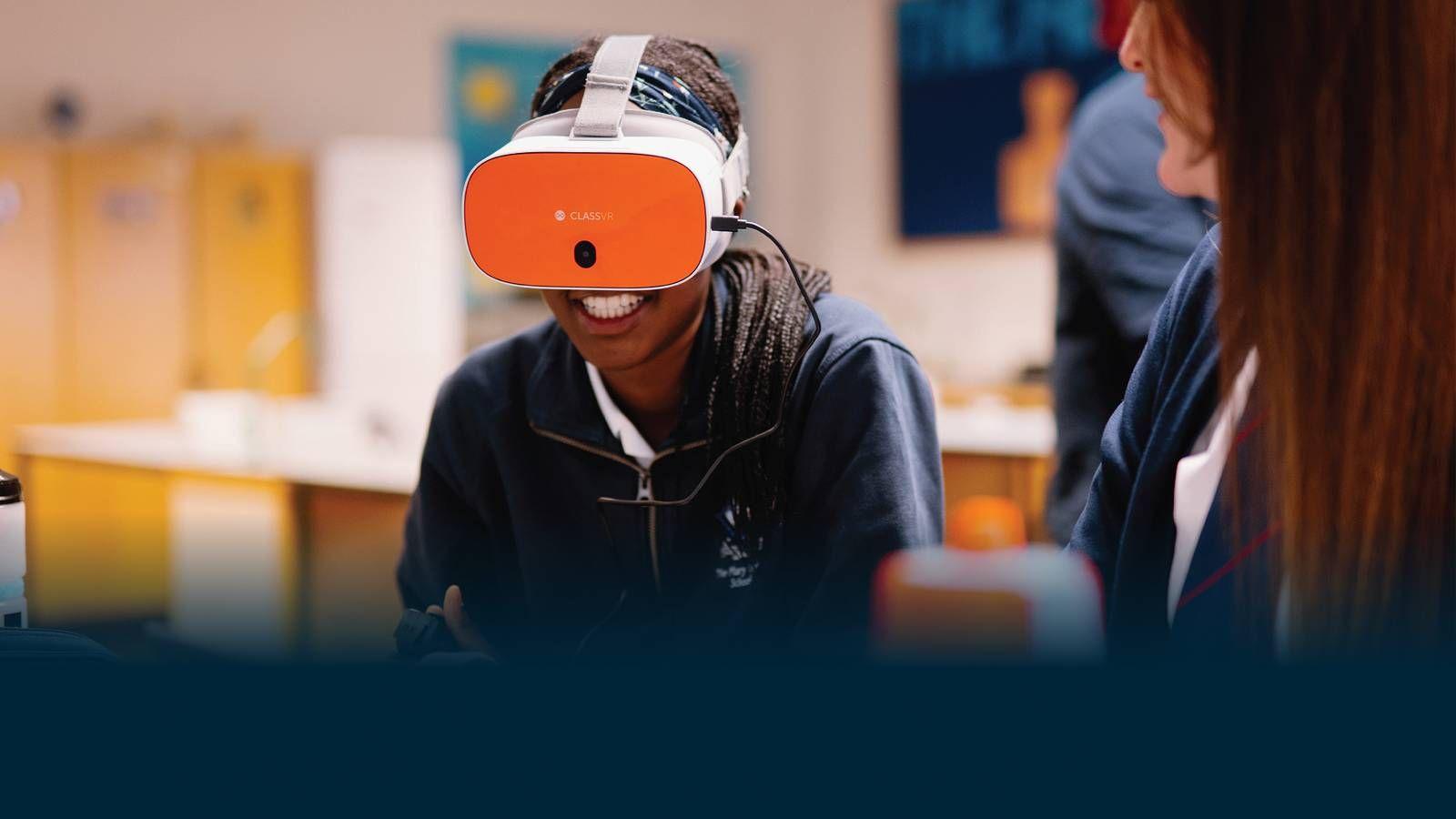
3. ClassVR
- Overview: Specifically designed for schools, ClassVR offers dedicated educational VR headsets bundled with teacher controls and curriculum-aligned content.
- Pros: Designed for classroom management; robust teacher controls; curriculum resources included; safe surroundings for students.
- Cons: Higher initial investment than smartphone-based solutions; needs reliable Wi-Fi.
- Price: Packages start from around $400 per headset, with discounts for bulk orders.
4. Merge EDU & Merge Cube
- Overview: Merge EDU uses an affordable Merge Cube and app to deliver interactive science and STEM experiences both in VR and AR, with or without headsets.
- Pros: Extremely low cost; easy integration with devices already in most classrooms; hands-on activities boost engagement and retention.
- Cons: Some experiences are more AR than VR; individual device needed per student for full classroom implementation.
- Price: Merge Cube is ~$20; EDU plans vary, starting at low monthly rates for schools.
5. CoSpaces Edu
- Overview: CoSpaces Edu allows students and teachers to create VR environments and explore them using simple VR viewers, Chromebooks, or tablets.
- Pros: Encourages creativity and coding; accessible through browser; supports VR headsets and basic viewers; competitive subscription pricing.
- Cons: Some features behind paywall; best for older students with programming interest.
- Price: $3–$5 per user/month for education plans; basic VR viewers $15–$30.
Real-World Case Studies: Affordable VR Impact on Schools
case Study: Google Cardboard in Rural Schools
A district in rural Kansas integrated Google Cardboard for regular science and history lessons. With a modest investment of under $300, students explored the solar system, pyramids of Egypt, and local agricultural operations in immersive 360-degree experiences.Teachers reported a 28% improvement in engagement and more robust class discussions following VR activities.
Case study: Merge Cube for Hands-on STEM Experiments
An urban elementary school piloted Merge EDU, using Merge Cubes with existing iPads. Students interacted with 3D models of the human heart,molecules,and geography. Teachers noticed a significant boost in test scores and retention rates, with parents supporting further VR adoption.
Practical Tips for Schools Implementing low-Cost VR
- Start Small: Begin with pilot programs using a few devices before scaling school-wide.
- Utilize Existing hardware: Leverage smartphones and tablets with inexpensive VR viewers.
- Engage Teachers: Invest in teacher training, workshops, and peer coaching.
- Focus on Core Subjects: Prioritize VR apps that support science, math, history, and literacy.
- Ensure Safety: Supervise VR use; set clear guidelines for health and device sanitation.
- Gather feedback: Continuously assess student engagement and learning outcomes to refine your VR strategy.
Frist-Hand Experiences: What Educators Say
“Introducing VR into my classroom turned passive learners into active explorers. Even with somthing as cheap as Google Cardboard,my students grasped complex topics and started asking ‘what’s next?’ after each lesson!”
– Ms. Carter, 5th Grade Teacher
“Merge Edu brought science to life. The kids were genuinely excited for STEM labs and started building their own models. VR is now a regular part of our curriculum, thanks to affordable solutions.”
– Mr. Rodriguez, STEM Coordinator
Conclusion: Ready to Transform Your School with affordable VR?
The next generation of learning is immersive and interactive. with a host of cost-effective VR solutions now available, even schools with limited budgets can offer transformative, engaging, and memorable learning experiences. By focusing on affordable tools such as Google Cardboard, Oculus Quest 2, ClassVR, Merge Cube, and CoSpaces Edu, schools can bridge the gap in educational equity and ensure students have access to the best resources. As more educators share their successes, it’s clear that VR in schools isn’t just a trend—it’s a revolution in academic achievement, creativity, and curiosity.
Ready to take the leap? explore the solutions above, pilot affordable VR programs, and watch your students thrive in an educational environment limited only by imagination!