
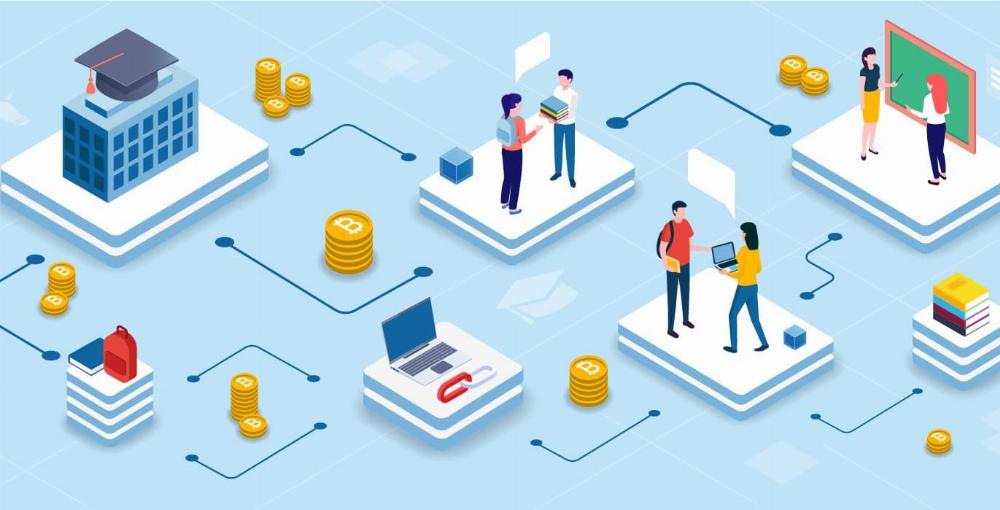
Transforming Higher Education: Compelling Case Studies of Blockchain in Action
Blockchain technology is rapidly reshaping sectors worldwide, and higher education is no exception. As institutions strive for greater transparency, security, and efficiency, blockchain in higher education emerges as a game-changing solution. From tamper-proof diplomas to streamlined administrative processes, blockchain is paving the way for a more trustworthy and efficient academic future.
Introduction: Why Blockchain Matters in Higher Education
The need for robust, transparent, and secure systems in academia has never been greater. Traditional methods for managing student records, verifying credentials, and safeguarding sensitive data are often complex, vulnerable to fraud, and inefficient. Enter blockchain technology: a decentralized,immutable ledger that offers trust,transparency,and automation of processes through smart contracts. The following article explores blockchain’s growing role in higher education, showcasing real-world case studies and the transformative impact across the educational landscape.
The Benefits of Blockchain in Higher Education
- Enhanced Security: Immutability safeguards student data,academic records,and credentials.
- Transparent Verification: Employers and institutions can instantly verify qualifications, reducing fraud.
- Streamlined Management: Automating processes like transcript issuance saves time and resources.
- Student Empowerment: Learners gain control over their academic data and can easily share verified achievements.
Blockchain in Higher Education: Compelling Case studies
1. MIT’s digital Diplomas: Pioneering Blockchain Credentials
The Massachusetts institute of Technology (MIT) broke new ground by issuing diplomas on the blockchain. In 2017, MIT launched the Blockcerts program, in partnership with Learning Machine, empowering graduates with digital, tamper-proof diplomas accessible via smartphones.
- Impact: Graduates instantly share verifiable credentials with employers, eliminating the delay and cost of paper transcripts.
- Security: Blockchain ensures diplomas cannot be altered or counterfeited.
- User Experience: MIT students praised the ease and control over their academic records.
“We believe credentials belong to the student and blockchain provides a secure, self-reliant platform for lifelong verification.” — MIT Registrar’s Office
2.University of Nicosia: Leading with Blockchain Degrees
The University of Nicosia in Cyprus became the world’s first university to offer a Master’s degree in Blockchain and issue academic certificates on the blockchain. All graduates receive digital diplomas that can be verified globally in seconds.
- Global accessibility: Graduates validate their credentials from anywhere, supporting international study and work.
- Fraud Prevention: Automatic verification deters degree falsification.
- Thought leadership: The university strengthens its reputation as an innovator in blockchain education.
3. Sony Global Education & Fujitsu: Secure Academic Data Sharing
In Japan, Sony Global Education and Fujitsu partnered to develop a blockchain-based platform enabling universities to share and manage student records securely.
- Collaboration: Multiple institutions safely share verified academic records, supporting student transfers and inter-university programs.
- Privacy: Blockchain’s cryptographic design protects student privacy.
- Efficiency: Automated record management reduces administrative workload.
4. University of Melbourne: Blockcerts for Learning achievements
The University of Melbourne was the first Asia-Pacific institution to pilot blockchain for credentialing micro-certificates—short courses, professional growth, and learning achievements.
- Micro-Credentials: Reflects the growing demand for alternate credentials and lifelong learning.
- Employer Engagement: Allows quick validation during recruitment, building trust in option education.
- Student Empowerment: Learners curate and share a digital portfolio of verified skills.
5. ECAR-IT (Spain): Decentralizing Academic Administration
Spain’s ECAR-IT project aims to decentralize student data management across multiple universities. Using blockchain, the system offers a unified, secure method for sharing and verifying records, helping comply with GDPR privacy regulations.
- Regulatory Compliance: Ensures student data is managed in accordance with strict European privacy laws.
- Interoperability: Simplifies student mobility across European universities.
First-Hand Experiences: Voices from the Blockchain Classroom
educators, administrators, and students involved in blockchain initiatives report increased efficiency, security, and a shift toward learner-centric education. Here’s what they share:
- Educator perspective: “Automating transcript verification freed up hours—now we focus more on students, less on paperwork.”
- Student Testimonial: “With my digital diploma,I applied for internships abroad without worrying about losing or forging documents.”
- Registrar Insight: “Fraudulent diplomas used to be a costly problem. Blockchain reduced credential forgery almost overnight.”
Practical Tips: How Universities Can Adopt Blockchain
- Start Small: Pilot blockchain for micro-credentials or transcript verification before scaling campus-wide.
- Partner Strategically: Collaborate with blockchain consortia or tech vendors specializing in education.
- Educate Stakeholders: Train staff and inform students about blockchain’s benefits and basic functionality.
- Prioritize Security: Select protocols and partners with robust security credentials.
- Engage Regulators: Ensure legal and ethical compliance, especially regarding student privacy.
Addressing Challenges: What to Watch For
- Standardization: Higher education institutions must agree on blockchain standards for interoperability.
- Scalability: Robust solutions are required to support millions of records.
- Change Management: Transitioning from legacy systems requires staff training and cultural shifts.
- Regulatory Hurdles: Navigating privacy, data ownership, and compliance is crucial for success.
The Future of Blockchain in Higher Education
Blockchain adoption is rapidly accelerating. As universities explore advanced applications—such as decentralized identity,peer-to-peer credentialing,and blockchain-based learning analytics—the potential for transformation in academia is limitless.
- Lifelong Learning: Blockchain enables a portable, comprehensive record of skills and achievements spanning a lifetime.
- Global Credentials: Blockchain erases geographical boundaries, allowing academic mobility like never before.
- Smart Contracts in education: Automated agreements facilitate scholarships, tuition payments, and performance-based rewards.
Conclusion: Embrace the Academic Revolution
The compelling case studies above demonstrate that blockchain technology is transforming higher education by tackling enduring challenges around data integrity, trust, and efficiency. Institutions like MIT, University of Nicosia, University of Melbourne, and others are leading the charge, providing blueprints for universities worldwide. As blockchain in higher education continues to gain momentum, embracing this technological revolution will be crucial for institutions aiming to future-proof their operations and better serve students in a global, digital world.
Ready to explore how blockchain can benefit your campus? Now is the time for educational leaders to learn, pilot, and implement blockchain-powered solutions that empower students and streamline academic administration—ushering in a new era of trust and transparency in higher education.