
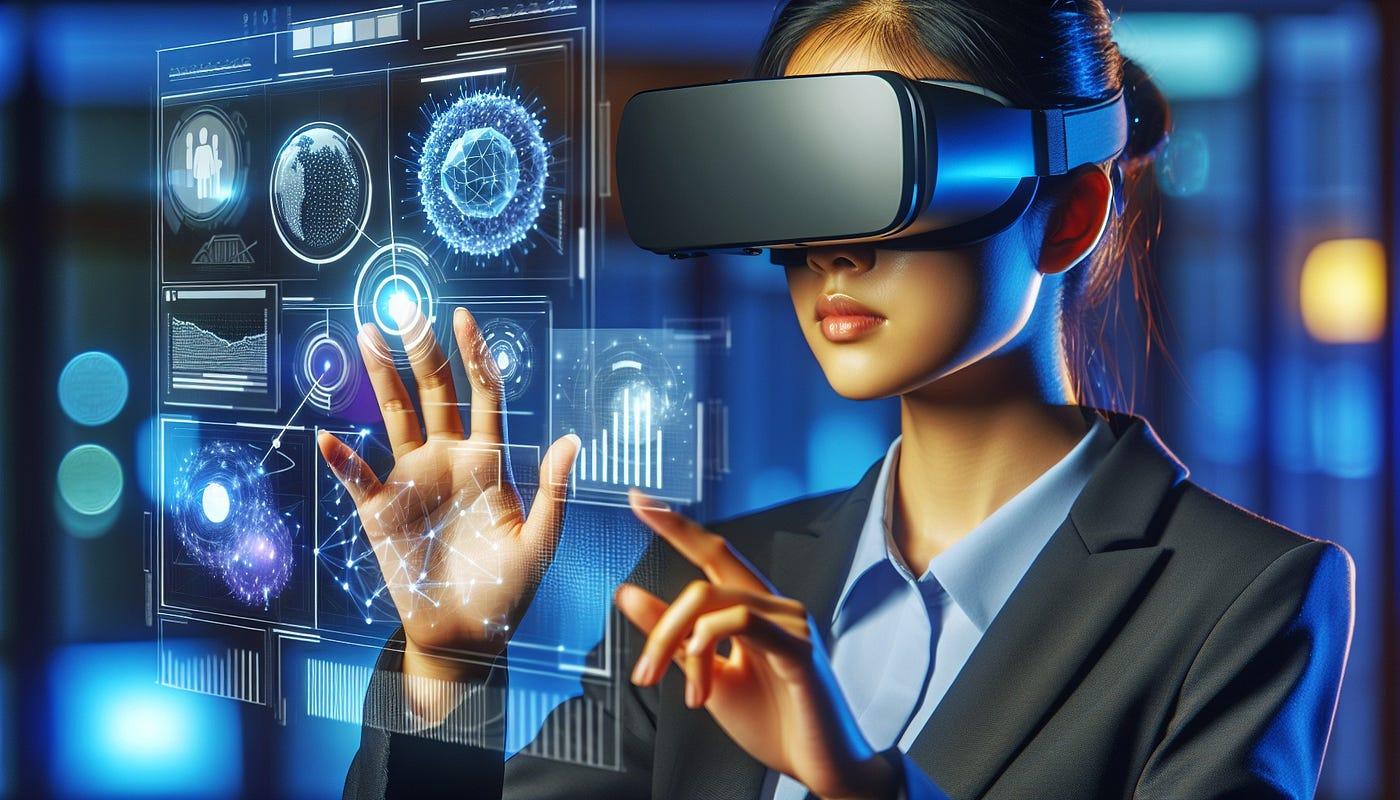
Unlocking Learning: 7 Inspiring case Studies of Successful VR/AR implementations in Schools
Virtual Reality (VR) and Augmented Reality (AR) technologies are revolutionizing education, transforming traditional classrooms into immersive, interactive learning environments.Smart schools across the globe are leveraging VR and AR to enhance student engagement, deepen understanding, and unlock new ways of teaching. In this article, we explore seven inspiring case studies of successful VR/AR implementations in schools, examine the benefits, and share practical tips for integrating these technologies into your educational institution.
Why VR/AR in Schools is Changing the Classroom
Integrating VR and AR in schools brings fresh opportunities to teachers and students alike.These technologies offer a hands-on, sensory experience that empowers students to learn complex concepts dynamically. from walking thru ancient ruins to simulating scientific experiments, VR/AR learning environments move beyond traditional textbooks, fostering creativity and collaboration.
Key Benefits of VR/AR Learning
- Enhanced engagement: Interactive lessons captivate students and boost participation.
- Personalized Education: Individualized VR learning paths cater to diverse learning styles.
- Safe Experiential Learning: Students can experiment and explore without real-world risks.
- Improved Retention: Immersive learning supports memory and understanding of complex topics.
- Global Connectivity: connects classrooms to cultural and scientific experiences worldwide.
7 Inspiring Case Studies: Successful VR/AR Implementations in Schools
let’s explore seven real-world examples where VR/AR technology in education has made a ample impact on teaching and learning.
1. The King’s Academy,UK: History Comes Alive with VR
The King’s Academy in Middlesbrough embraced VR to enhance its history curriculum. Students donned VR headsets to explore reconstructions of ancient Rome and medieval battlefields. Teachers observed marked improvements in engagement, critical thinking, and retention. Pupils reported feeling “transported” into history, making lessons memorable and meaningful.
- Notable Outcome: Exam scores improved by 20% among participating classes.
- Tip: Start with short virtual field trips to introduce students to VR learning.
2. Clifton Primary School, South Africa: Augmented Science Labs
Facing limited laboratory resources, Clifton Primary School leveraged AR apps to provide simulated chemistry and physics experiments. Tablets and smartphones helped students visualize molecular structures and chemical reactions in 3D, bridging the gap between theory and practice.
- Notable Outcome: Science grades increased, and more students expressed interest in STEM careers.
- Tip: Use free or low-cost AR apps for science visualization and laboratory simulation.
3. Bellevue High School, USA: Immersive Language Learning
Bellevue High School integrated VR into its language curriculum. Students practiced conversational Spanish by interacting with simulated native speakers in virtual marketplaces and classrooms. The school reported improved confidence and fluency in speaking exercises.
- Notable Outcome: oral proficiency ratings rose by 30% in Spanish classes.
- Tip: Incorporate VR scenarios aligned with real-life situations to strengthen conversational skills.
4. St. Mary’s College, Australia: AR for Special Education
St.mary’s College customized AR experiences for special education students. Using AR-enabled worksheets and flashcards, students with learning differences engaged with content tailored to their pace and style. teachers observed greater willingness to participate and improved comprehension among students with autism and dyslexia.
- Notable Outcome: Noticeable increase in classroom participation and comprehension levels.
- Tip: Collaborate with special education staff to design AR activities for individual needs.
5. Tokyo International School, Japan: Exploring the Arts with VR/AR
Tokyo International School introduced VR art galleries and AR drawing apps to nurture students’ creativity. Learners explored virtual museums featuring world-renowned masterpieces and experimented with augmented painting techniques. Arts educators saw a boost in engagement and creative expression.
- Notable Outcome: Students produced more original and experimental artwork for exhibitions.
- Tip: use VR/AR to supplement traditional art classes and showcase student work in virtual galleries.
6. Maplewood Elementary, Canada: Gamified Math with AR
In partnership with EdTech startups, Maplewood Elementary gamified its mathematics curriculum using AR. Interactive math games projected onto classroom surfaces helped students visualize geometric shapes, fractions, and equations, making maths less abstract and more accessible.
- Notable Outcome: Standardized math test scores rose by 15% among participating students.
- Tip: Integrate AR games that provide instant feedback and adapt to student responses.
7.Horizon School District, Sweden: Virtual Field Trips and Science Expeditions
Horizon School district adopted VR to offer virtual field trips, allowing students to “visit” rainforests, outer space, and past landmarks without leaving the classroom. Science teachers used VR simulations to demonstrate ecosystems and space phenomena, cultivating curiosity and global awareness.
- Notable Outcome: Increased participation in project-based learning.
- Tip: Schedule regular virtual excursions to supplement classroom topics and inspire research projects.
First-Hand Experience: Voices from the Classroom
Educators and students involved in these AR/VR education case studies reveal the transformational power of immersive technology:
- “Our students feel more confident in the subject matter, and there’s a new spark in their curiosity.” – Science Teacher, Clifton Primary School
- “The VR tours gave us a shared global experience. It connected our class to history and geography in an unforgettable way.” – Social Studies teacher, Horizon School District
- “AR tools helped my child stay focused and enjoy learning math for the first time.” – Parent, Maplewood Elementary
Practical Tips for Implementing VR/AR in Your School
- Start Small, Scale Gradually: Pilot VR or AR in one subject or class to measure outcomes before expanding.
- Train Your Staff: Provide professional development sessions on using VR/AR educational resources.
- Choose the Right Content: Select age-appropriate, curriculum-aligned VR/AR resources for maximum impact.
- Ensure accessibility: Plan for diverse learners, including those with special educational needs.
- Involve Parents: Communicate the benefits and provide demos to encourage support.
- Evaluate & Adapt: Gather feedback, assess academic outcomes, and adjust your approach.
VR/AR Learning Resources: Top Tools to Consider
- Google Expeditions: Virtual field trips for various subjects and grade levels.
- Matterport: 3D tours of museums, landmarks, and natural environments.
- CoSpaces Edu: Allows students to build and explore virtual worlds themselves.
- Zspace: AR/VR STEM labs for interactive science and math learning.
- Tilt brush & Quiver: Creative AR/VR apps for art and design education.
Conclusion: Inspire Tomorrow’s learners Today
As these seven case studies show, the successful implementation of VR and AR in school classrooms can redefine what learning looks like. Schools integrating immersive technologies report better academic outcomes, greater engagement, and more enriched educational experiences. With thoughtful planning, practical training, and a commitment to innovation, educators can unlock new dimensions of learning and prepare students to thrive in a technology-driven world.
Ready to bring the future into your classroom? Start exploring VR/AR in education today and watch your students unlock their fullest potential!