
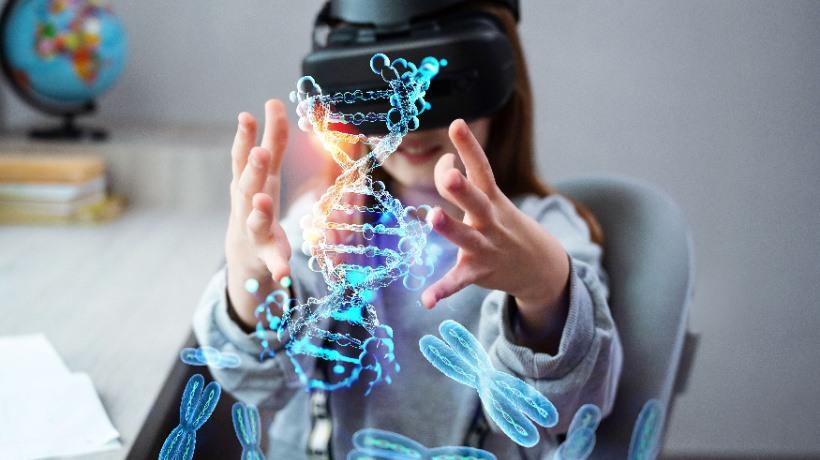
Unlocking the Future of Education: How VR and AR Power Immersive Learning
Technology is not just changing the world—it’s redefining how we learn. Virtual Reality (VR) and Augmented Reality (AR) stand at the forefront of educational innovation, offering students and teachers unprecedented immersive experiences. From interactive history lessons to hands-on science experiments, VR and AR are revolutionizing classrooms worldwide. Join us as we explore the transformative power of immersive learning and how VR and AR are unlocking the future of education.
What are VR and AR in Education?
Virtual Reality (VR) in education refers to a fully immersive, computer-generated environment. Learners don VR headsets and interact with 3D worlds—from outer space to ancient civilizations.Augmented Reality (AR) in education overlays digital content (like images, videos, or 3D models) onto the real world, typically viewed through smartphones, tablets, or AR glasses.
- VR Example: Exploring the inside of a human heart or walking through a reconstructed medieval castle.
- AR Example: Using apps that add interactive science models on top of a textbook page for deeper understanding.
Benefits of VR and AR for Immersive Learning
Immersive technologies offer a wide range of unique advantages, helping educators engage students like never before. Hear’s how VR and AR transform learning experiences:
1. enhanced Engagement & Motivation
- Interactive, visually rich environments capture students’ attention.
- Gamification elements make learning fun and interactive.
2.Improved Knowledge Retention
- Hands-on VR/AR experiences help students better remember and understand concepts.
- Studies show that multisensory learning increases facts retention by up to 75% compared to traditional learning.
3. Accessible and Inclusive education
- Enables students with different learning styles—visual, kinesthetic, auditory—to thrive.
- AR/VR can simulate field trips and labs, making experiences accessible regardless of physical limitations or geography.
4. Safe and Scalable Simulations
- students can practice complex or hazardous procedures (e.g.,chemical experiments) in a risk-free environment.
- one VR module can easily be scaled to hundreds of students across multiple locations.
5. Real-time Feedback and Assessment
- Instant feedback allows students to learn from mistakes in real time.
- Teachers can track individual progress and adapt instruction accordingly.
How VR and AR Are Used in modern Classrooms
From primary schools to higher education, immersive learning with VR and AR spans a wide range of subjects and teaching methods:
STEM Subjects
- Virtual chemistry labs where students mix compounds and observe reactions without needing physical materials.
- 3D anatomy explorations that allow students to “walk through” the human body and study organs from all angles.
History & Social Studies
- Time-travel experiences: Walk through ancient Rome or witness key historical events in first-person.
Language Learning
- Immersive language labs: Practice conversation in virtual markets or cafes, interacting with AI-driven characters.
- AR flashcards: Visualize vocabulary and sentence structures in real time.
Special Education
- Sensory-rich AR apps designed for students with autism or learning disabilities.
Case Studies: Real-World Success Stories
The impact of VR and AR in education is already making headlines. Here are a few inspiring examples:
Stanford Virtual Heart
Stanford University Medical School developed the Stanford Virtual Heart, allowing medical students to visualize and interact with a 3D model of a beating heart. This immersive VR tool has dramatically improved students’ understanding of heart defects and accelerated learning outcomes.
Google Expeditions
Google Expeditions offers teachers a way to take students on virtual field trips to landmarks like the Great Wall of China or the surface of Mars. Over one million students worldwide have gained access to experiences that were otherwise impractical for their schools to deliver.
AR Scavenger Hunts in Primary Schools
Elementary schools are using mobile AR apps for interactive scavenger hunts. As students solve math problems or answer quiz questions, digital clues appear in their classrooms, encouraging physical movement and teamwork.
First-Hand Experiences: Voices from the Classroom
Teachers and students report profound changes after integrating VR and AR into their lessons. Here’s what they say:
“I’ve never seen my class so engaged. After our virtual journey through the solar system, even shy students were eager to ask questions and share discoveries.”
— Mrs. Thompson, 5th Grade Teacher
“I struggled with biology until I could actually see and walk through the nervous system. It’s like learning from the inside out.”
— Brian, High School sophomore
Practical Tips for Integrating VR and AR in Education
thinking about integrating immersive learning in your classroom or institution? here are actionable tips for accomplished adoption:
- Start Small: Pilot with a single lesson or subject and gather feedback from students and teachers.
- Leverage Existing Devices: Many AR apps run on smartphones or tablets already available in schools, reducing costs.
- Prioritize Content Quality: Choose applications aligned with your curriculum and age group.
- Train Educators: Offer professional progress for teachers to maximize the impact of these new tools.
- monitor Student Progress: Use built-in analytics to assess learning outcomes and fine-tune your approach.
- Promote Safety and Inclusivity: Allow for breaks, accommodate students sensitive to sensory input, and ensure everyone has access to the technology.
Challenges and Considerations
While VR and AR have immense potential in education, there are challenges to navigate:
- Cost of Hardware: High-quality VR headsets and AR devices can be expensive, though prices continue to drop.
- Scalability: Integrating immersive learning across large districts requires planning and investment.
- Equity: Access to devices and reliable internet must be ensured for all students.
- Digital Literacy: Teachers and students may need training on how to use and make the most of these tools.
Despite these hurdles, forward-thinking institutions are finding innovative solutions—like device sharing, grant funding, and open educational resources—to make VR and AR accessible to everyone.
The Future of Immersive Learning: Trends to Watch
Emerging innovations point to a future where immersive learning is a cornerstone of modern education:
- Mixed Reality (MR): Combining AR and VR for seamless, interactive experiences.
- AI-Driven Content: Adaptive learning paths built into VR/AR environments for personalized education.
- Global Collaboration: Virtual classrooms connecting students and teachers across continents.
- Wearable Tech Integration: Lighter, more affordable AR glasses and VR gear designed for education.
conclusion: Embracing the Future, One Lesson at a Time
The integration of VR and AR in education is no longer a futuristic dream—it’s happening in classrooms around the globe, enhancing engagement, inclusion, and retention. While challenges remain, the potential for immersive learning to inspire curiosity and empower every learner is too great to ignore.
Now is the perfect time for educators, schools, and institutions to embrace these technologies and unlock a future where learning is not just effective, but truly unforgettable. Immersive experiences through VR and AR are paving the way to a more dynamic, equitable, and impactful education system for generations to come.