
Unlocking the Future of Microlearning in Education: Trends, Benefits, and Emerging Innovations
Microlearning is rapidly transforming the educational landscape. As technology continues to evolve and learners’ attention spans shrink, traditional teaching methods are facing more challenges than ever before. Enter microlearning: a strategy that delivers content in small, focused bursts, designed to be impactful and memorable. This complete guide explores the future of microlearning in education, delving into trends, benefits, case studies, innovations, and practical implementation tips for educators.
Table of Contents
- Introduction to Microlearning in Education
- Microlearning Trends Revolutionizing Education
- Key benefits of Microlearning
- Real-World Case Studies
- Emerging Innovations in Microlearning
- Practical Tips for Implementing Microlearning
- Conclusion: Shaping Education’s Future with Microlearning
introduction to Microlearning in Education
Microlearning refers to the delivery of learning content in short,focused segments that typically span a few minutes or less. This strategy leverages bite-sized modules, interactive media, and dynamic platforms to make learning more adaptive and user-amiable. Recognized for it’s ability to cater to today’s fast-paced lifestyles and mobile-first world, microlearning has become a game-changer in both academic and corporate environments.
Why is Microlearning Gaining Traction?
- Short Attention Spans: Learners now prefer and retain data better when delivered in small, digestible pieces.
- Mobile Learning (mLearning): More students and educators are using smartphones and tablets for on-the-go access.
- Flexible & Self-Paced: Microlearning modules fit easily into busy schedules, allowing personalized pacing.
- Immediate Submission: Short lessons often focus on specific skills that can be quickly applied.
Microlearning Trends Revolutionizing Education
The future of microlearning in education is shaped by various trends that align closely with digital transformation and modern learner expectations. Staying updated with these trends helps educators create high-impact microlearning experiences.
1. Mobile-First Microlearning
- Learning content is designed for smaller screens,ensuring accessibility anywhere,anytime.
- Mobile apps and push notifications enhance learner engagement and retention.
2. Video-Based Microlearning
- Short, engaging educational videos make complex topics more digestible.
- Platforms such as YouTube, TikTok, and dedicated educational apps are driving this movement.
3. Gamification and Interactive Assessments
- Micro-quizzes, badges, and leaderboards boost learner motivation.
- Interactive scenarios simulate real-life situations in a safe surroundings.
4. Personalized Learning Pathways
- Algorithms recommend tailored content based on learner’s progress and preferences.
- Adaptive microlearning platforms use AI to refine learning paths.
5.Integration with Learning Management Systems (LMS)
- Microlearning modules are increasingly linked with existing LMS for tracking and analytics.
- Seamless management of curriculum and learner progress.
Key Benefits of Microlearning
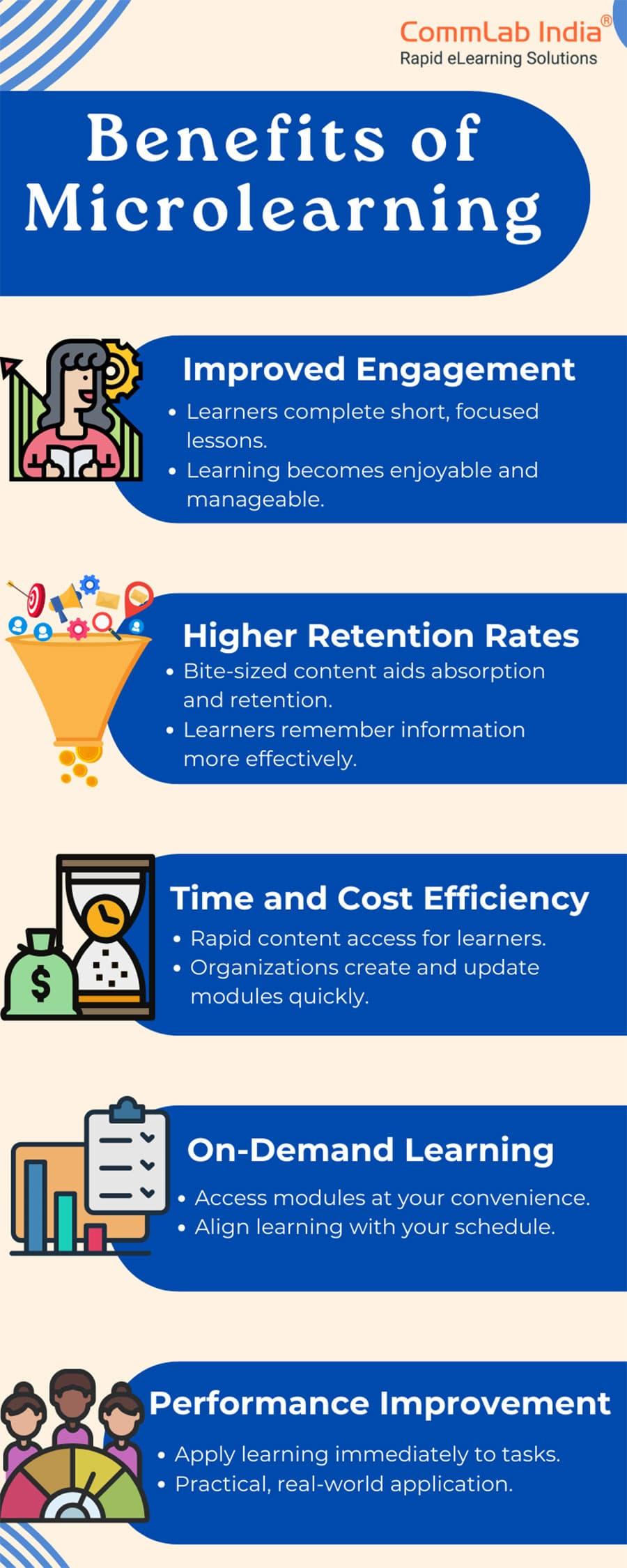
microlearning offers a wealth of advantages for educators,institutions,and learners alike. Below are the most notable benefits of adopting microlearning strategies in education:
- Enhanced Knowlege Retention: Short bursts of information are easier to remember and recall.
- Increased Engagement: Interactive content keeps learners motivated and curious.
- On-Demand learning: Learners access exactly what they need, when they need it (Just-In-Time Learning).
- Cost-Effective Content Creation: Developing short modules is faster and frequently enough cheaper than full-length courses.
- Supports Diverse Learning Styles: Combines text, visuals, audio, and interactive elements to cater to various preferences.
- Agility and Scalability: Easily update and scale micro-content across different learner groups or courses.
“Microlearning is not about decreasing the depth of content but about optimizing the method and timing of delivery for maximum impact.” — Jane Bozarth, Learning and Progress Expert
Real-World Case Studies
Case Study 1: Microlearning in K-12 Education
A leading school district in Texas incorporated microlearning strategies into its mathematics curriculum. By breaking lessons into 5-minute video segments and using daily interactive quizzes, they saw a 25% increase in student test scores and participation rates over one academic year.
case Study 2: Higher Education Transformation
A university in Australia launched a microlearning platform where students accessed modules on-demand via their mobile devices. Over 80% of students reported greater satisfaction with their learning experience, and dropout rates decreased by 15%.
Case Study 3: Corporate Training crossover
Drawing inspiration from microlearning in education,a Fortune 500 company deployed bite-sized compliance modules. Employees completed their training 40% faster, and assessment scores improved by 30%.
Emerging Innovations in Microlearning
The microlearning landscape is in constant evolution. Here are some breakthrough innovations redefining how educators and learners engage with content:
AI-Driven Content Creation
- Artificial intelligence analyzes learner data and preferences to auto-generate customized microlearning modules.
- Natural language processing (NLP) tools create micro-summaries and flashcards from larger documents or lectures.
Augmented Reality (AR) and Virtual Reality (VR)
- Immersive micro-experiences simulate real-world scenarios for skills like science exploration, language practice, or history tours.
- AR apps overlay interactive instructions directly in the learning environment.
Voice-Activated Learning
- Voice assistants (e.g., Alexa, Siri) deliver microlearning content in hands-free formats.
- audio-based micro-podcasts fit seamlessly into daily routines.
Social Microlearning
- Peer-to-peer sharing platforms foster collaborative microlearning ecosystems,promoting user-generated content and discussion threads.
Practical Tips for Implementing Microlearning in Education
If you’re considering integrating microlearning into your educational setting,consider these actionable steps:
- Define Clear Objectives: Identify the specific skills or knowledge gaps microlearning should address.
- choose the Right Tools: Explore user-friendly microlearning platforms or plugins, such as EdApp, TalentCards, or Moodle integrations.
- Keep Modules Focused: Each microlearning unit should cover one concept or outcome; avoid information overload.
- Utilize multimedia: Incorporate videos, infographics, and interactive elements to increase engagement.
- Assess and Iterate: Gather learner feedback and track progress to refine your approach continuously.
- Promote Accessibility: Ensure microlearning content meets accessibility standards for all students.
Tips for WordPress-Based Educators
- Embed microlearning videos using responsive plugins like WP video Lightbox.
- use LearnDash or LifterLMS for micro-lesson structuring and automated quizzes.
- Leverage push notifications and shortcodes to deliver fresh micro-content to subscribers.
Conclusion: Shaping Education’s Future with Microlearning
The future of microlearning in education is luminous and full of possibilities. As pedagogical methods adapt to shifting learner needs and technological advancements, microlearning stands out as a versatile and highly effective educational tool. Its trends, benefits, and innovations are reshaping classrooms, empowering educators, and enhancing student outcomes like never before.
Whether you’re an educator, administrator, or eLearning developer, embracing microlearning—paired with the latest trends and best practices—can unlock significant improvements in engagement, retention, and overall educational success. Ready to take your learning initiatives to the next level? The future is micro, and it starts now.