
Unlocking teh Future of Microlearning in Education: Trends, Benefits, and What’s Next
In today’s fast-paced digital era, education is constantly evolving to meet the demands of learners and educators. One standout innovation reshaping the educational landscape is microlearning. This approach, characterized by delivering content in small, manageable units, is transforming how students and professionals learn new information effectively and efficiently. In this article, we’ll delve deep into the world of microlearning in education, exploring its recent trends, numerous benefits, practical tips for implementation, compelling case studies, and what the future holds for this revolutionary learning method.
What is Microlearning?
Microlearning refers to bite-sized,focused learning experiences designed to achieve a specific learning outcome. Typically delivered digitally, microlearning modules range from a few seconds to fifteen minutes and can include videos, quizzes, infographics, podcasts, or interactive simulations.
- Short and focused content for quicker consumption
- Delivered on multiple platforms (mobile, desktop, tablets)
- Highly engaging, interactive, and actionable
- On-demand and easily accessible by learners
Current Trends Shaping Microlearning in education
Over the past few years, microlearning has gained remarkable traction in both K-12 and higher education—as well as corporate training. Here are the prominent trends influencing its adoption and effectiveness:
- Mobile-First Learning: with smartphones everywhere, microlearning modules are increasingly designed for mobile consumption, offering learners unparalleled flexibility and accessibility.
- Personalized Learning Journeys: AI and data analytics enable the customization of microlearning paths, adapting content to individual learner needs, strengths, and weaknesses.
- Gamification: Elements like points, badges, leaderboards, and interactive challenges make microlearning more fun and motivating.
- Video-Based Content: Short videos and animations dominate microlearning strategies, making information more visual and easier to retain.
- Social and Collaborative Learning: Integration with chat platforms, forums, and online communities is allowing learners to share knowledge and collaborate efficiently via micro-content.
- Microcredentials and Digital Badges: Credit-bearing micro-courses empower lifelong learners with tangible recognitions they can display on resumes or LinkedIn profiles.
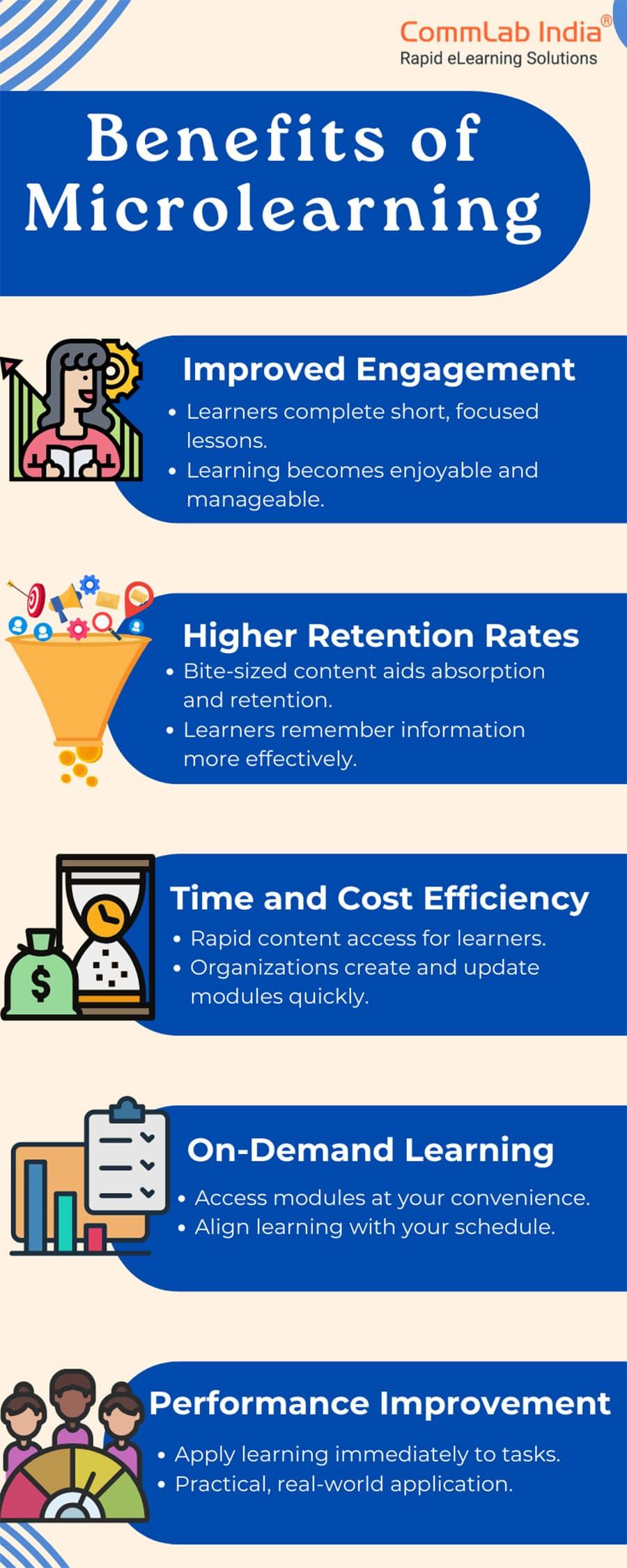
Top Benefits of Microlearning for Educators and Learners
The benefits of microlearning extend beyond its simplicity. Educational institutions and organizations worldwide are reaping the rewards:
- Enhanced Learner Engagement: Shorter sessions fit modern attention spans, sustaining interest and motivation.
- Improved Knowledge Retention: Repetition and spaced learning help embed new concepts, reducing cognitive overload.
- Time Efficiency: Learners quickly absorb content without disrupting their day-to-day schedules.
- On-the-Go Accessibility: Microlearning fits into busy lives, enabling anytime, anywhere education.
- Better Assessment and Feedback: Bite-sized modules make frequent, targeted assessments possible, allowing instant feedback.
- Easy Updating: Rapidly update or iterate individual micro-content pieces to keep learning content relevant.
“Microlearning’s modular structure not onyl caters to diverse learning preferences, but also empowers learners to take control of their own learning journey.”
Case studies: Microlearning Success Stories
Case Study 1: Improving Student Outcomes at a University
A large public university integrated microlearning videos and self-assessment quizzes into their undergraduate curriculum. Within one year, course completion rates increased by 18%, and student feedback indicated higher satisfaction and reduced anxiety regarding complex topics.
Case Study 2: Microlearning in Corporate Training
Major tech giants like Google and IBM use microlearning modules for onboarding and continual professional development. Employees reported a 30% enhancement in knowledge retention and a 25% faster path to workplace competency compared to traditional learning formats.
Case Study 3: K-12 Education—Personalized STEM Lessons
An innovative edtech startup partnered with a school district to deliver personalized microlearning modules in science and mathematics. Test scores improved by an average of 14%, and teachers could track student progress in real-time, allowing for targeted interventions.
Practical Tips for Effective Microlearning Implementation
- Start Small: Begin with one or two micro-courses on topics you’re already teaching and analyze learner feedback.
- Leverage Multimedia: Incorporate videos, infographics, podcasts, and interactive elements to make content appealing.
- Keep Objectives Clear: Each micro-lesson or module should have a focused,actionable objective.
- Use Assessment Wisely: Integrate quizzes, polls, and scenario-based activities for instant feedback and engagement.
- Allow Self-Pacing: Ensure learners can complete micro-modules at their own speed, enhancing comfort and retention.
- Monitor & Iterate: Use analytics to monitor learner progress and improve microlearning content continuously.
Challenges to Consider with Microlearning in Education
- Integration with Existing Curriculum: Ensuring microlearning supplements rather than replaces essential deep learning.
- Content Fragmentation: Risk of learners missing out on broader context or interconnected themes.
- Technology Barriers: Not all learners may have consistent access to digital devices or high-speed internet.
- Assessment Complexity: Evaluating higher-order skills through micro-assessments can be challenging.
Addressing these challenges requires careful instructional design and robust support systems for both educators and students.
The Future of Microlearning in education: What’s Next?
The future of microlearning is brimming with potential and innovation. As education technology continues to advance, expect the following developments:
- AI-Powered Learning Paths: Artificial intelligence will power adaptive microlearning experiences, ensuring each learner gets the right content at the right time.
- Integration with Augmented & Virtual reality: Microlearning modules will increasingly use AR and VR to create immersive bite-sized activities, especially in STEM and healthcare training.
- Expanded Use of Microcredentials: Watch for growth in stackable microcredentials and nano-degrees, enabling personalized, lifelong learning journeys and workforce development.
- API Integrations and EdTech Ecosystems: Microlearning platforms will seamlessly integrate with LMS, HR systems, and collaboration tools, enabling unified and data-driven education delivery.
- Focus on Soft Skills: Expect an upsurge in microlearning content focusing on communication,leadership,emotional intelligence,and othre 21st-century skills.
The intersection of microlearning and cutting-edge technology signals a new era, where flexible, learner-centered approaches become the norm across all educational sectors.
Conclusion: Embracing the Microlearning Revolution
Microlearning is not just a trend; it is a powerful, research-backed strategy poised to redefine the future of education. Offering learners greater flexibility, educators more effective engagement tools, and organizations a scalable path to upskilling, microlearning’s impact is just beginning to unfold.
As you look ahead, consider how microlearning can fit into your own teaching, training, or personal development strategies. By harnessing the latest microlearning trends, tools, and insights, you’ll be well-equipped to thrive in the ever-changing educational landscape.
Start today—empower yourself or your association with microlearning solutions and unlock a smarter, more agile future!