
Verifying Qualifications: How Blockchain Is Revolutionizing Credential Authentication
In an era were information can be easily manipulated, verifying qualifications and authenticating credentials has become a complex challenge. From academic degrees to professional certifications, organizations and individuals alike seek reliable methods to authenticate these documents. Enter blockchain technology—the innovative solution that is reshaping how we ensure the legitimacy and integrity of credentials. This article delves into how blockchain is revolutionizing credential authentication, highlighting its advantages, real-world applications, and best practices for individuals and institutions.
What is Credential Authentication?
Credential authentication is the process of verifying the validity and authenticity of diplomas, certificates, licenses, and other qualifications. Conventional methods often involve manual verification, contacting issuing organizations, or relying on paper-based records—which are not only time-consuming but also prone to fraud and human error.
- Academic Credentials: Degrees, transcripts, diplomas.
- Professional Certifications: IT certificates, medical licenses, vocational training records.
- Work Experience: Letters of recommendation, employment history.
Challenges with Traditional Credential Verification
Relying on conventional credential verification systems exposes organizations to several challenges:
-
Fraudulent Documents:
Fake degrees and forged certificates are rampant globally. According to a BBC report, thousands of fraudulent degrees are sold annually to unsuspecting employers.
-
Time-consuming Verification:
Manual verification may take days or weeks,especially when contacting international institutions for confirmation.
-
Data Privacy Risks:
Conventional verification often requires sharing sensitive personal data, posing privacy risks for applicants.
-
High Administrative costs:
The process can be labor-intensive, leading to increased operational costs for organizations.
How Blockchain Technology Transforms Credential Authentication
Blockchain is a distributed ledger technology that enables secure, transparent, and tamper-proof storage of data. Its unique features make it ideal for verifying qualifications and credentials in a decentralized and efficient manner:
- Immutability: Onc credentials are recorded on the blockchain, they cannot be altered or tampered with, ensuring authenticity.
- Decentralization: no single point of failure or control. Multiple parties can independently verify the data.
- Clarity: Credential records are accessible for verification in real-time, yet privacy is protected through cryptographic techniques.
- Automation: Smart contracts can automate the issuance and verification of credentials, reducing manual workload and errors.
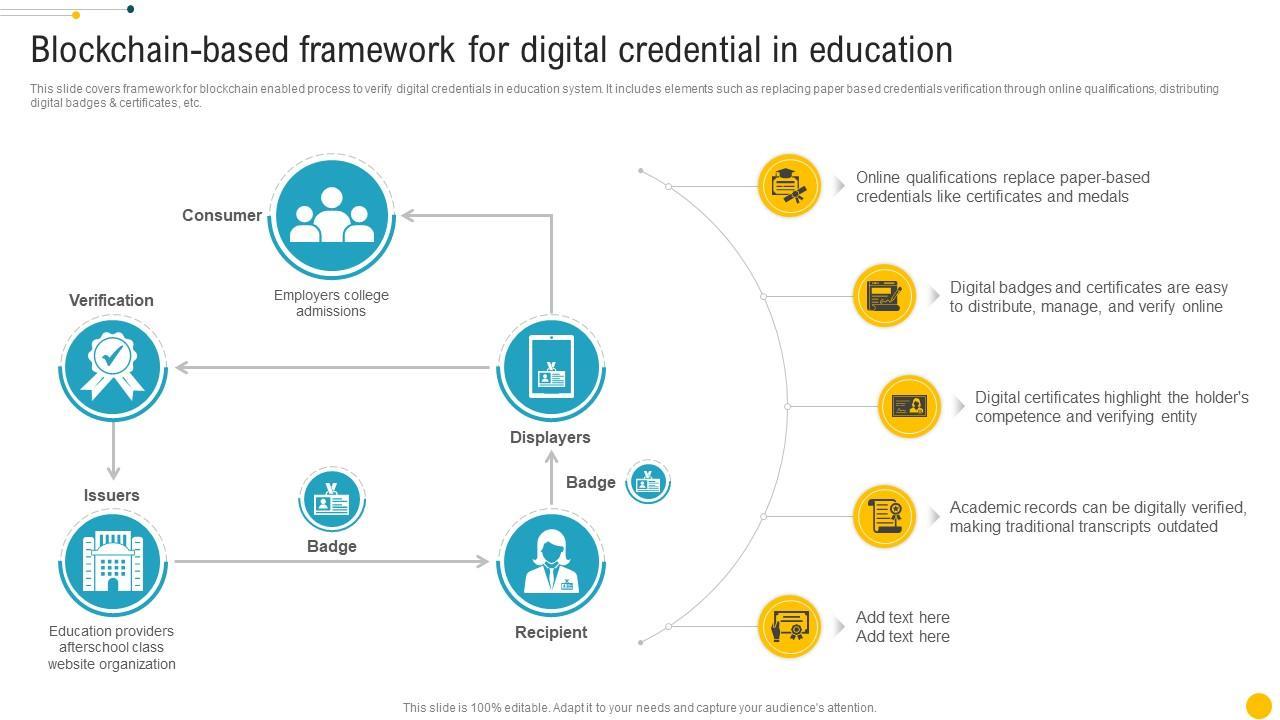
How Blockchain-Based Credential Verification Works
- Issuance: An accredited institution (university,certification body) issues a digital credential and stores a unique hash (digital fingerprint) of it on the blockchain.
- Ownership: The recipient owns a digital wallet containing their credential and can share a verifiable link or QR code with employers.
- Verification: Employers or third parties can instantly validate the credential’s authenticity by checking the hash on the blockchain—ensuring accuracy and eliminating the risk of fraud.
Benefits of Blockchain Credential Authentication
Integrating blockchain into credential authentication delivers clear advantages:
- Instant Verification: Credentials can be verified in seconds, from anywhere in the world.
- Enhanced Security: Blockchain’s cryptographic security makes it virtually unfeasible to forge or alter records.
- User Privacy: Only the credential owner can share information; sensitive data isn’t stored on the blockchain.
- Reduced Costs: Eliminates third-party verification and administrative fees.
- Empowers Individuals: Professionals own and manage their credentials, promoting portability and lifelong learning.
Real-World Use Cases and Case Studies
Blockchain-based credential authentication systems are already redefining standards across education and the workforce. Here are some leading examples:
- MIT’s Digital Diplomas: The Massachusetts Institute of Technology (MIT) uses blockchain to issue digital diplomas to graduates, which employers can verify instantly using a publicly accessible ledger.
- World Education Blockchain: UNICEF,in partnership with various global institutions,launched an education blockchain platform in Africa to authenticate academic records and boost job applications.
- Europass Digital Credentials: The European Union’s Europass initiative leverages blockchain for cross-border recognition of qualifications, making it quicker and easier for Europeans to pursue education and job prospects internationally.
- Learning Machine and Blockcerts: These platforms allow institutions worldwide to issue tamper-proof, easily verifiable certificates, adopted by universities and professional associations.
Practical Tips for Institutions and Individuals
Whether you’re a university administrator, a certifying body, or a professional looking to secure your credentials, here’s how you can benefit from blockchain-based qualification verification:
For Institutions and Employers
- partner with Reliable Platforms: Collaborate with established blockchain credential providers like Blockcerts, Credly, or TrueRec.
- Integrate with Existing Systems: Ensure your institution’s digital records are compatible with blockchain-based solutions.
- Educate Stakeholders: Train staff and students on the benefits and usage of blockchain-based credentials.
- Stay Up-to-Date: Keep abreast of legal frameworks and data privacy regulations affecting digital credentials in your region.
For Individuals
- Request Digital credentials: Ask your issuing institutions if they offer blockchain-based certificates.
- Protect Your Digital Wallet: use secure wallets to store and manage your credentials.
- Verify Before Sharing: Always validate your credentials on the appropriate blockchain before sending them to potential employers.
Challenges and Limitations
While blockchain offers unparalleled advantages,it is indeed critically important to acknowledge ongoing challenges:
- Adoption Barriers: Many institutions are slow to adopt due to resource constraints or lack of technical expertise.
- Standardization: The need for uniform data formats and protocols to ensure interoperability across regions and sectors.
- Legal Recognition: Not all jurisdictions recognize blockchain-based credentials as official proof yet.
- Digital Divide: Limited access to digital wallets and blockchain technology in underserved communities.
despite these limitations, ongoing innovation, collaboration, and regulatory momentum are rapidly overcoming these hurdles.
Conclusion: Blockchain as the Future of Credential Authentication
The challenge of verifying academic, professional, and personal qualifications is larger than ever in today’s digital world. Blockchain technology stands out as the game-changer, ensuring the security, speed, and reliability of credential authentication. as adoption grows, individuals and organizations can look forward to a future where forged documents and cumbersome verification processes become relics of the past.
Whether you’re an employer seeking to streamline hiring processes, a university promoting the integrity of your qualifications, or a professional safeguarding your career achievements, embracing blockchain verification of credentials is the key to building trust in an increasingly digital world.
The future of verifying qualifications is here—and it is undeniably powered by blockchain.